Search

Living Theologically

theology and the Christian life

Author

Mike McGarry

Mike is the Founder/Director of Youth Pastor Theologian, where he currently writes and speaks to serve youth pastors. Visit youthpastortheologian.com to learn more about YPT and read his blogs and books, or to learn more about bringing Mike to speak at your church, retreat, or conference.

Why Church Membership?

Open Church Door

No one needs to be a church member in order to attend the church’s worship services. There are many places where non-members can happily serve and participate outside of Sunday morning. The local church is not like a private golf course where you need to be a member, dress a certain way, and pay your membership dues in order to participate. But does this mean that church membership is unimportant and optional?

The Bible doesn’t contain a verse specifically commanding church membership, but Scripture routinely assumes that the people of God will gather together and be committed to each other. The early Christians did not have the ability to “church shop” or have a casual relationship with their local church. In the same way, Christians who live in the midst of persecution find themselves needing to choose whether or not they’re “in” or they’re “out” of the church, the family of God.

There is a growing trend in American Christianity to minimize church membership. It is certainly possible to be a genuine Christian who is not a member in a local church, but there are many reasons why it is healthy and good for every Christian to be a member in their local church.

Continue reading “Why Church Membership?”

What Does Baptism Mean (and why is it important)?

I didn’t get baptized until I was a Sophomore in college even though I started taking my faith seriously as a teenager. I just didn’t think baptism mattered. At the time, most of the people I knew who were getting baptized were either babies or other peers in youth group who I knew weren’t actively following Jesus outside of Youth Group. So I concluded baptism really wasn’t that important. I was baptized when I was in college after I learned more about the meaning and importance of baptism.

Baptism doesn’t “save” you and you can be a Christian without having ever been baptized. However, the Bible’s pretty clear that we who claim to live for Jesus should be baptized. Time and time again throughout the book of Acts people are getting baptized when they place their faith in Jesus as their Lord and Savior (Acts 2:41; 8:12; 8:36; 10:48; and tons more). Even Jesus got baptized to set the example for his disciples.

Baptism

What Does Baptism Mean?
First, baptism symbolizes what has happened between us and God. The Apostle Paul writes, “We were therefore buried with him through baptism into death in order that, just as Christ was raised from the dead through the glory of the Father, we too may live a new life” (Romans 6:4). Baptism symbolically represents that we “died with Christ” (going under the water is like burying our old way of life without Christ) and we have been “reborn/resurrected in Christ” (coming up from the water is like being born again with Christ). It is a visible demonstration of the new life we have in Jesus Christ.

Second, baptism foreshadows the Christian’s hope that we will be resurrected from the grave when Jesus Christ returns as judge. “Now if we died with Christ, we believe that we will also live with him, because we know that Christ, having been raised from the dead, will not die again” (Romans 6:8-9). The Christian’s eternal security comes from their union with Christ, which is made visible through baptism. 

Third, baptism identifies you as a member of the Church. 1 Corinthians 12:12-27 makes it clear that every Christian is a member of the Church, the “Body of Christ.” Christians throughout history have seen baptism as the rite of entrance into the Church. It is a way to clearly say, “I am a Christian, and my life isn’t all about me anymore. Instead, I want my life to build up the Church for the glory of God.” This is also why baptism and membership in the local church where you attend naturally go hand-in-hand.

Why Baptism Matters
In the Bible (and in many places today) it was a very dangerous thing to be publicly baptized and identify yourself with Jesus Christ. This act of faith took guts and often brought serious opposition. Sadly, many Americans take their freedom and comfort for granted, and since baptism doesn’t “cost” them anything, they treat getting baptized as a casual and unimportant option.

“If you confess with your mouth, ‘Jesus is Lord,’
and believe in your heart that God raised him from the dead,
you will be saved.”
Romans 10:9

Baptism should not be a matter of convenience. Instead, it is a wonderful opportunity to publicly declare your faith to your nonChristian friends and family. Sometimes people put off getting baptized because they don’t like people looking at them or being the center of attention. When we know the sin and judgment from which we have been rescued because of the truth that baptism represents, then we should take the opportunity to put ourselves aside and confess what God has done through Jesus Christ.

If we are too timid to stand for Christ in a church full of people who believe as we do and before our friends and family (even if they aren’t Christians, they still care for us), then I wonder how we will boldly stand for Christ in the midst of persecution.

Baptism is a biblical and meaningful expression of personal faith in Jesus Christ. Whether you grew up attending church or not, being baptized is a turning point you can look to in seasons of doubt or temptation in order to reaffirm, “I have been buried with Christ, and I have risen to new life with him. He is my life and my hope. I am not ashamed of the gospel.”

A Final Word of Caution
Prayerfully consider getting baptized, but please do not get baptized because you feel pressured by people to do so. If you are not compelled to give your life to worship and obey Jesus Christ then you should not be baptized… even if your parents or friends or youth pastor is encouraging you to be baptized. Simply tell them “I’m not ready yet” and trust them to respect your decision.

Two articles I have found helpful regarding children and baptism: 

Three Things Every Christian Should Know

Evangelism has always been difficult. Gone are the days when even nonChristians generally understood what Christianity taught. Nowadays, even many professing-Christians struggle to articulate the essentials of Christian theology. Because we can no longer assume a general awareness of Christian thinking, evangelism will continue to require us to teach basic theological truths before we can be assured that people know enough to truly become Christians.

Here are three truths every Christian should know and be able to clearly explain to others.

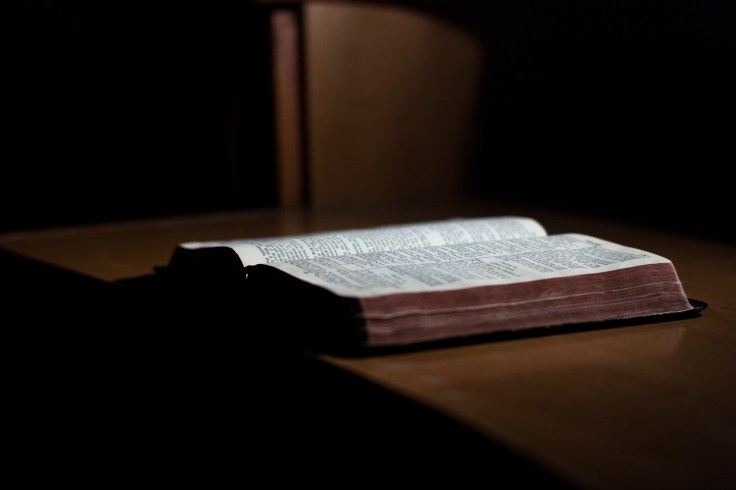
Bible on Table


Continue reading “Three Things Every Christian Should Know”

Why Can’t God Overlook Sin?

“For the wages of sin is death, but the gift of God is eternal life through Jesus Christ our Lord.” Romans 6:23

The paycheck of sin is death. That is what we’ve earned. And yet, many of us struggle with the teaching that momentary sins would receive eternal death – it seems awfully extreme. It is a common question: “If God is love, why can’t God overlook sin?”

  • Johnny has disobeyed his parents all day long but expects to get rewarded with ice cream at the end of the day.
  • Suzie is hoping for a pay raise or promotion at her next review, even though she routinely ignores her boss’ instructions and does things her own way instead.
  • Bill doesn’t understand why he failed his math exam. After all, he recently discovered a whole new way of doing math that’s better than the “old way” of the past.

These simple examples reflect the justice and love of God. It would not be right or “good” for Johnny, Suzie, or for Bill to be rewarded. They have all disregarded human authority who has been rightly placed over them. And if it is good for us to receive appropriate discipline by human authority, why would God overlook our sin?

Forgiveness

Continue reading “Why Can’t God Overlook Sin?”

Is Repentance Necessary to be a Christian?

I used to know someone, we’ll call him Fred, who boasted about his Christian faith while talking about his party lifestyle. He would do whatever he wanted all week long and party hard on the weekends. But he always made time to go to confession on Saturday to make sure he was “all set” before God. But my question is this: does that work?

Is it enough to believe in your mind certain truths about the gospel and lay hold of the promise, “there is now no condemnation for those who are in Christ Jesus” (Romans 6:1)?

Here’s the short answer: Saving faith in the gospel moves us past confession into repentance.

The Difference Between Confession & Repentance
The heart of confession is telling the truth. Telling the truth about God, and telling the truth about yourself. There are two kinds of “confessions” necessary:

  • Confessing the truth about God. If we don’t know the truth about who God is and what he’s done, then we cannot place our faith in the good news of Jesus Christ. At minimum, we need to understand who Jesus is, what happened on the cross, why it was necessary, and what God expects of those who confess faith in him.
  • Confessing the truth about yourself. We need to admit to God and to others that we realize our complete inability to save ourselves. When we come to recognize the severity of our sin, and the wrath that is rightfully ours, then we confess our great need and God’s greater provision.

Meanwhile, repentance is a change in behavior. Where confession has to do with the mouth, repentance addresses the hands and feet.

  • Repentance is a change in direction. It’s an about-face: whereas before you were walking in one direction you have stopped, confessed “I’m going in the wrong direction!,” turned around, and begun walking in the correct direction.

Turn Around Continue reading “Is Repentance Necessary to be a Christian?”

Are These the End Times?

Eclipse

Wars. Terrorism. Earthquakes. Increasing racial and political tension. Even a solar eclipse! Some people may be wondering, “Are these the end times? These must be signs that we’re nearing the end, and Jesus’ return is soon!”

In what is known as the “Olivet Discourse” (because the conversation took place on the Mount of Olives), Jesus addressed the end times with a small group of his apostles. That conversation is relayed for us in Mark 13. Here are a few of the highlights:

“Do you see these great buildings (the Temple)? Not one stone will be left upon another—all will be thrown down.”

“Many will come in my name, saying, ‘I am he,’ and they will deceive many. When you hear of wars and rumors of wars, don’t be alarmed; these things must take place, but it is not yet the end. For nation will rise up against nation, and kingdom against kingdom. There will be earthquakes in various places, and famines. These are the beginning of birth pains.”

“But in those days, after that tribulation: The sun will be darkened, and the moon will not shed its light; the stars will be falling from the sky, and the powers in the heavens will be shaken. Then they will see the Son of Man coming in clouds with great power and glory. He will send out the angels and gather his elect from the four winds, from the ends of the earth to the ends of heaven.

“Now concerning that day or hour no one knows—neither the angels in heaven nor the Son—but only the Father. Watch! Be alert! For you don’t know when the time is coming.”

Continue reading “Are These the End Times?”

Will They Mourn Your Loss?

Three Crosses

I’ve had the honor to attend many funerals as a pastor. Some funerals are marked by deep loss and pain. Others are highlighted by joyful hope. Faithful Christians leave a strong legacy behind them because they lived their lives in order to encourage and strengthen others. These services are full of stories and “remember when’s” that, though told through tears, radiate a deep joy and hope because that person’s life was shaped by their faith in Jesus Christ.

I am convinced the worst thing that can happen is not to be hated, but to be forgotten. This is why children who crave attention would rather have negative attention (discipline and punishment) than to be ignored.

The Bible gives a clear warning through the life of King Jehoram in 2 Chronicles 21,

“When Jehoram had established himself over his father’s kingdom, he strengthened his position by killing with the sword all his brothers as well as some of the princes of Israel…. He did what was evil in the Lord’s sight, but for the sake of the covenant the Lord had made with David, he was unwilling to destroy the house of David since the Lord had promised to give a lamp to David and to his sons forever…. Jehoram was thirty-two years old when he became king; he reigned eight years in Jerusalem. He died to no one’s regret and was buried in the city of David but not in the tombs of the kings.”

Jehoram got ahead in life – he had money, power, and position. But he lost it all, because it was gained by his own might and for his own benefit. The LORD only showed him grace because of His covenant with David. Eventually, God struck Jehoram down and the people rejoiced. His life and legacy serves as a warning for each of us today.

Rather than living to set up our own kingdoms, may we be remembered as faithful witnesses of Jesus Christ (Acts 1:8). This is the Christian calling: To know Christ and to make him known.

Here are three characteristics I’ve observed about the faithful men and women who have left godly legacies.

Continue reading “Will They Mourn Your Loss?”

Faith is Not a Good Idea

Jim grew up in church and still believes most of what he learned there, but his life doesn’t look like you might expect. He cusses, drinks more than he should, has been known to sleep around on occasion, and hasn’t gone to church (or read the Bible) in well over a decade. But overall, he’s a good guy who tries to look after his friends as best he can. When Jim hears coworkers talking about religion, he often jumps in to offer the “Christian perspective.” He considers himself a Christian (although he’s quick to admit “I’m a bad Christian”).

While friends like Jim don’t really care what label you give them, it’s worth our time to figure out what’s going on when religious ideas seems to get confused as faith.

Sears Tower
Photo by Maarten van den Heuvel on Unsplash

What is Faith?
The Bible defines faith this way,

“Now faith is the assurance of things hoped for, the conviction of things not seen.” (Hebrews 11:1 ESV)

Faith isn’t simply a “good idea.” It’s assurance and conviction in what is unseen. The visible is interpreted through the lens of the unseen – faith shapes life.

  • Because God is holy – I live my life to worship and honor him
  • Because God is merciful and gracious – I am accepted because of his provision, not my performance
  • Because God is the judge – I live according to his law
  • Because God is faithful – I will trust him even in the midst of suffering
  • Because the Bible is God’s Word – I will read it, understand it to the best of my ability, and obey it as the very word of God

Continue reading “Faith is Not a Good Idea”

The Gospel is For the Street

What good is faith if it only survives in a sterile environment? The gospel belongs not only in our pulpits but on the streets .

Faith shapes life, gives meaning, and inspires hope. If the gospel is only good news to those whose lives are middle-class, then is it truly “good news?” The gospel applies to addicts, the homeless, and to the marginalized.

Jesus came to bring life to the hopeless, rescue for the perishing, and dignity for the beggar. If these are the people whom Jesus came to serve and give his life for, shouldn’t they be welcomed in our churches and in our theologizing?

Woman on the Street.jpg Continue reading “The Gospel is For the Street”

Blog at WordPress.com.

Up ↑