Search

Living Theologically

theology and the Christian life

Author

Mike McGarry

Mike is the Founder/Director of Youth Pastor Theologian, where he currently writes and speaks to serve youth pastors. Visit youthpastortheologian.com to learn more about YPT and read his blogs and books, or to learn more about bringing Mike to speak at your church, retreat, or conference.

3 Things Every Christian Must Know

Man with Bible in Field

Theology is important. What you believe about God matters. But for the normal Christian (or the person who’s considering Christianity), it can be extremely overwhelming to know where to begin.

Here are three things every Christian must know. They are also useful for evangelism and sharing the Gospel with others, because this is a clear and simple way to summarize what is at the heart of Christianity.

The Essential Core:

Who God is: God is the holy creator of heaven and earth who made us in his image to love and worship and reflect him in this world.

What God has Done: Because we have sinned, and our sin has earned God’s judgment, He took the initiative to rescue us from the wrath we deserve. In love, God came to us in Jesus Christ who lived and died and conquered death on our behalf so we could be forgiven, made new, and adopted as sons and daughters of God.

Who is God Calling You to Be: As a son/daughter of God, my life isn’t my own, but God’s. I live for his glory and not my own. I live to do everything in a way that shows the light and love and saving grace of God to all people, inviting them to confess their sin, repent, and become children of God themselves.

Continue reading “3 Things Every Christian Must Know”

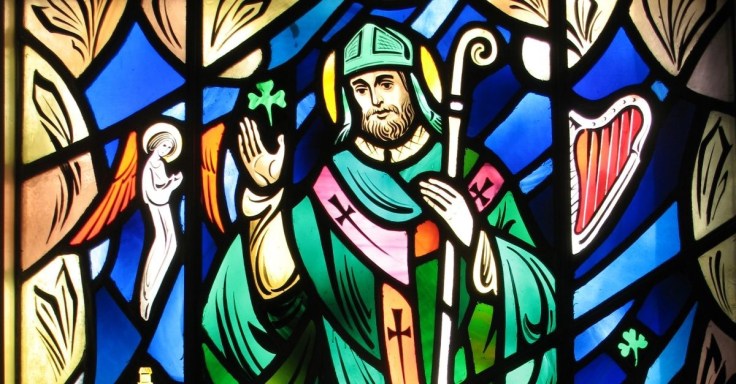
St. Patrick the Missionary

Saint Patrick

I live 25 miles from Boston, am Irish, and yet I never knew anything about St. Patrick growing up, other than assuming he was some Irish priest who made everyone feel obliged to wear green to school.

But Patrick wasn’t even Irish – he was English.  When he was 16 he was kidnapped by pirates and sold into slavery to the “barbarians” in Ireland where he tended sheep for his master.  The years of isolation while tending sheep he spent countless hours in prayer and meditating on what he had been taught as a child.

Patrick eventually escaped, through God’s providence, and made his way safely back to his home, where he enrolled in Seminary and later became an ordained Roman Catholic priest.  After a number of years, God spoke to Patrick in a dream and told him to return to the barbarians of Ireland and to preach the Good News of Jesus Christ to them and teach them to live for Christ.

Patrick sold all he had and went to Ireland as a missionary.  He would travel with important chieftains orpay for safe passage to ensure his safety and protection.  He spent time with the people in various tribes to learn about their particular culture (music, art, stories, etc.) in order to communicate important biblical truths in understandable ways – the most well known example of this is Patrick’s use of the shamrock as an example of the Trinity (three leafs, one shamrock; three Persons of the Trinity, one God).

He built simple churches, baptized and trained men who had converted from paganism to Christianity and appointed them as priests for their tribes. After a church was established and priests were appointed he would move to the next tribe and faithfully present the Good News of Jesus Christ there.

Patrick was a godly man who loved the gospel of Jesus Christ so much he went to his former-captors.  His ministry played a history-shaping role in Ireland, and it was all because of his commitment to take Jesus’ promises and commands seriously. He loved his enemies, and he went to make disciples of all nations because he believed the Holy Spirit would be with him.

This is the life of the man whom we honor on St. Patrick’s Day every year.  It is most ironic that he returned to Ireland to teach them to flee their ungodliness, and on the day we “honor” him we seem to return to exactly what he sought to rescue men from. If you want to honor St. Patrick this year, tell someone about Christ and invite them to repent of their sin and receive the forgiveness of sin.

Other articles about Saint Patrick:

A Plea for Good Christian Art

I’ve never considered myself artistic until sometime last year. The last art class I took was in third grade. In fourth grade I started band, and that replaced art class. It never occurred to me that was because band was simply another form of artistic expression. Words have always been my playthings, and more recently, as I’ve read books about developing as a writer, it has been impressed on me that writers must see themselves as artists.

So when I issue this plea for Good Christian art, it is not simply a call for good painting and sculpture, but also for those who create music, movies, dance and writing. Let me explain what I mean by “Good Christian Art” by unpacking those words in reverse order.

Pencil Continue reading “A Plea for Good Christian Art”

Are All Sins Equal?

We’ve heard it said many times: “Sin is sin. All sins are equal. Your sins and mine are different, but they’re the same before God.”

Like most things, this statement has the ring of truth, but it’s not entirely biblical. That also means it’s not entirely unbiblical either. The last thing I want to encourage is a hierarchy stating, “Which sins are the worst sins.” That would be unhelpful only fuel self-righteousness.

Sometimes sins are so close in nature and effect they are like comparing a red apple to a green apple. At other times it’s like comparing oranges with tomatoes. Both are rightly categorized as fruits, but the differences end there. Sin is sin. That is true.  But that does not mean they are all the same.

apples

Here is how different kinds of sins are equal, how they are different, and why it matters.
Continue reading “Are All Sins Equal?”

Does God Love Everyone?

Here is a question I was recently asked by a teenager in my ministry (many of the most difficult theological questions I’ve been asked came from Middle Schooler students). Since it’s such a good question, I can only assume many other would benefit from looking to Scripture for an answer. Here’s the question:

Does God love everyone, or only “his children?”

Christianity is built on the announcement of grace: that by the life, death, resurrection, and coming return of Jesus Christ our freedom from sin and death has been secured, and that our only hope comes by trusting in God’s provision rather than in our own good works. The gospel proclaims salvation as a free gift of faith. It is a message of the love of God for sinners, and yet it also implies that not all will be saved. The gospel is good news because there is bad news: we are all sinners who have heaped up judgment on ourselves. God is not fair – and that’s a good thing… because if God was fair, we’d all receive judgment for our sin.

With this in mind, the above question is perfectly natural because it seems like God must love Christians and hate “sinners.” But is this what the Bible teaches?

crowd-in-underground Continue reading “Does God Love Everyone?”

Christianity Without Repentance?

Imagine a man who gets married but continues to live with bachelor-priorities. He may be in love, but he’s not ready to become a husband. Marriage requires a change in priorities and in lifestyle for both husband and wife. Decisions will be made differently, money will be shared, and each person’s actions affects the other.

In the same way, no one becomes a Christian without repentance. It is not enough to hear the gospel and intellectually believe it. Faith in Christ leads to confession of sin and repentance. Sin must be confessed and repented of, or Christ will merely be viewed as the safety net to protect us from hell.

hairpin-turn Continue reading “Christianity Without Repentance?”

Who Was St. Valentine?

red-love-heart-valentinesLast year (2016), Americans spent just below $20 million to celebrate Valentine’s Day. It is a day to celebrate love and relationships, which apparently requires brand-name cards, chocolates, gifts, and expensive dinners. But where did these traditions come from, why are they linked to a Christian saint, and how can we benefit from knowing any of this?

Who Was St. Valentine?
Unfortunately, very little is known about the real life of Valentine. What we do know is Emperor Claudius II beheaded two Christian priests, both named Valentine (one of them in in 270). Details of these men’s lives remain murky, but it seems historically reliable to say both of these men lived (and it’s not just one man named Valentine and there are different accounts of his death) and they were both decapitated because of their resistance against the Emperor’s restrictions against Christianity.

It is historically proven that Christians endured extreme persecution at the hands of Roman Emperors in the early years of the Church and Valentine was not unique in his refusal to deny Christ and bow to the Empire. Accordingly, it is very possible that the myths are true about Valentine officiating marriages for Christians. Emperor Claudius II banned weddings because he believed it would be easier to recruit young men for military service if they were not able to wed. Valentine, however, refused to follow this ban and continued to give aid to fellow Christians who were suffering, and continued to evangelize and seek new converts to Christianity. He was then arrested and eventually executed.

There are legends about specific marriages and miracles he performed, but their records are from centuries after Valentine’s death (many Roman historical records were destroyed in the 6th century when Rome was sacked). There is also an account where Valentine restored the sight of a jailer’s daughter and sent her a note before his execution and signed it, “your Valentine.” It’s a sweet story, but we have shaky historical grounds for its reliability.

How Valentine Got His Own Day
NPR has an interesting article (The Dark Origins of Valentine’s Day) which gives more details about the Roman festival Lupercalia, but it’s enough to say it was celebrated yearly from February 13-15th and was a time marked for debauchery and lust. Since legends mark Valentine as the patron saint of the engaged and the young, and since he was martyred on February 14th, the inevitable link took place and “redeemed” the pagan holiday.

As “courtly love” gained steam during the Middle Ages and, later on, as the theater sought to portray romantic love, Valentine’s Day grew in prevalence and sentimentality. Young people would exchange handmade notes until finally Hallmark Cards began to mass-produced Valentine’s Day cards in 1918. Much to the chagrin of the single (and reluctant participants) the popularity of the day has only increased since.

What Can Christians Pull from the Origins of Valentine’s Day?

  1. Total commitment to Christ. Both Valentines were willing to give their lives to Christ while they lived and through the way they accepted their death. They lived for Christ in a way that put them in danger and would not renounce their faith even when threatened by death.
  2. Marriage is a mirror of Christ and the Church (Ephesians 5:31-32). Ironically today, we hear that marriage is both unimportant (because you can just live together anyway, so many see it as an unnecessary formality) while simultaneously seeing marriage as the most obvious battlefield for LGBTQ+ rights. Because of what marriage represents, Valentine could not disregard its significance.
  3. Maybe we’re celebrating Valentine’s legacy wrong? This is pretty obvious, but I doubt someone like Valentine would feel honored by us exchanging expensive flowers and chocolates while using the day to sleep with our boyfriend or girlfriend. In this sense, the way many people celebrate Valentine’s Day actually undercuts the very foundation Valentine is credited to uphold: the value of marriage.

Valentine’s Day should be a day marked by counter-cultural love for Christ, even in the midst of great persecution. In that way, we honor the memory of both men who give their names to the day.

Where to read more: History of Saint Valentine (Catholic Education Resource Center), Saint Valentine (Catholic Online), Feb 14: This Day in History (History Channel).


What is the Fear of the LORD?

What is the fear of the LORD? This is something many of us have heard about in church or read in the Bible, but it remains an abstract thought that we can’t clearly explain.

If “The fear of the LORD is the beginning of knowledge” (Proverbs 1:7), then it’s an important thing for us to understand what that means. Easton’s Bible Dictionary describes the fear of the LORD this way,

It is a fear conjoined with love and hope, and is therefore not a slavish dread,
but rather filial reverence.”
(Easton Bible Dictionary)

So it’s not a fearful dread that creates distance. Instead, it’s a fear build on love and hope that draws near to God in worship, humility, and obedience. These are the three keys to understanding what the Bible means by “the fear of the LORD.”

skyscrapers Continue reading “What is the Fear of the LORD?”

How to Overcome Temptation

Temptation is a daily reality for every Christian. For some, it is an overwhelming lure back into sinful habits we seem unable to escape; for others, it is a nagging invitation to participate in “acceptable sins” that subtly and slowly erode one’s integrity and intimacy with God.

Much more can be said than these four simple helps, but these are offered as ways for you to be strengthened in the midst of temptation. You can read another post I’ve written that cover some of this, but mostly focuses on how temptation workschess Continue reading “How to Overcome Temptation”

Blog at WordPress.com.

Up ↑