
Search

Living Theologically

theology and the Christian life

Category

Theology

3 Things Every Christian Must Know

Man with Bible in Field

Theology is important. What you believe about God matters. But for the normal Christian (or the person who’s considering Christianity), it can be extremely overwhelming to know where to begin.

Here are three things every Christian must know. They are also useful for evangelism and sharing the Gospel with others, because this is a clear and simple way to summarize what is at the heart of Christianity.

The Essential Core:

Who God is: God is the holy creator of heaven and earth who made us in his image to love and worship and reflect him in this world.

What God has Done: Because we have sinned, and our sin has earned God’s judgment, He took the initiative to rescue us from the wrath we deserve. In love, God came to us in Jesus Christ who lived and died and conquered death on our behalf so we could be forgiven, made new, and adopted as sons and daughters of God.

Who is God Calling You to Be: As a son/daughter of God, my life isn’t my own, but God’s. I live for his glory and not my own. I live to do everything in a way that shows the light and love and saving grace of God to all people, inviting them to confess their sin, repent, and become children of God themselves.

Continue reading “3 Things Every Christian Must Know”

Are All Sins Equal?

We’ve heard it said many times: “Sin is sin. All sins are equal. Your sins and mine are different, but they’re the same before God.”

Like most things, this statement has the ring of truth, but it’s not entirely biblical. That also means it’s not entirely unbiblical either. The last thing I want to encourage is a hierarchy stating, “Which sins are the worst sins.” That would be unhelpful only fuel self-righteousness.

Sometimes sins are so close in nature and effect they are like comparing a red apple to a green apple. At other times it’s like comparing oranges with tomatoes. Both are rightly categorized as fruits, but the differences end there. Sin is sin. That is true.  But that does not mean they are all the same.

apples

Here is how different kinds of sins are equal, how they are different, and why it matters.
Continue reading “Are All Sins Equal?”

Does God Love Everyone?

Here is a question I was recently asked by a teenager in my ministry (many of the most difficult theological questions I’ve been asked came from Middle Schooler students). Since it’s such a good question, I can only assume many other would benefit from looking to Scripture for an answer. Here’s the question:

Does God love everyone, or only “his children?”

Christianity is built on the announcement of grace: that by the life, death, resurrection, and coming return of Jesus Christ our freedom from sin and death has been secured, and that our only hope comes by trusting in God’s provision rather than in our own good works. The gospel proclaims salvation as a free gift of faith. It is a message of the love of God for sinners, and yet it also implies that not all will be saved. The gospel is good news because there is bad news: we are all sinners who have heaped up judgment on ourselves. God is not fair – and that’s a good thing… because if God was fair, we’d all receive judgment for our sin.

With this in mind, the above question is perfectly natural because it seems like God must love Christians and hate “sinners.” But is this what the Bible teaches?

crowd-in-underground Continue reading “Does God Love Everyone?”

Christianity Without Repentance?

Imagine a man who gets married but continues to live with bachelor-priorities. He may be in love, but he’s not ready to become a husband. Marriage requires a change in priorities and in lifestyle for both husband and wife. Decisions will be made differently, money will be shared, and each person’s actions affects the other.

In the same way, no one becomes a Christian without repentance. It is not enough to hear the gospel and intellectually believe it. Faith in Christ leads to confession of sin and repentance. Sin must be confessed and repented of, or Christ will merely be viewed as the safety net to protect us from hell.

hairpin-turn Continue reading “Christianity Without Repentance?”

How to Not be a Heretic

What you believe matters. Your beliefs about the world, yourself, and God are always operating in the background of your mind, shaping your decisions and passions. Especially today, where tolerance is often talked about but little practiced, talking about religious belief is difficult and tricky.

Being a Christian means you believe certain theological statements are true while rejecting other claims about God and religion are not true. Of course, that’s not unique to Christianity. Judaism, Islam, Buddhism, Hinduism, and even Atheism have their own “theological walls” that set the boundaries… and if you pass those boundaries then you can no longer be considered a part of that theological camp.

For example,

  • An Atheist cannot believe in intelligent design.
  • A Buddhist cannot believe the Jesus is the only way to heaven.
  • A Christian cannot believe there are multiple paths to heaven.

While some people throw the word “Heretic” at anyone with whom they have a strong disagreement, that doesn’t capture what heresy is. Heresy is a teaching that undercuts and contradicts the essential teachings of a religion. This is why Christians may disagree regarding Baptism or the Lord’s Supper, but Mormons and Jehovah’s Witnesses are considered cults who are outside the bounds of true Christianity. airplane-wreck Continue reading “How to Not be a Heretic”

God Uses Normal People

God doesn’t need first-round draft picks. He uses completely ordinary, ho-hum, sinful people to accomplish his purposes.

You are not so incredible God thought, “I need him on my team” or “What would I do without her?” You don’t need to be great for God. He is great enough. What we need is faith to trust him.

The incredible thing about God’s kingdom is this: it’s a gift of grace. We are unworthy and undeserving, but we receive it anyway.

Consider Abraham and Moses. Their names probably bring up the idea of great men who had great faith… men who are not like you. But here’s the thing: they were totally normal guys who imperfectly trusted God. The Bible doesn’t tell their stories as if they’re spiritual-superstars. Their failures are listed in black and white because their story isn’t about them… it’s about a sovereign God who works through normal people.

walking-up-stairs Continue reading “God Uses Normal People”

Why Did Jesus Come? For These Two Reasons…

Who knew that sweet baby boy in the manger would be the most controversial human in history? More ink has been spilled about him than anyone else who has ever lived.

It’s so easy for us to lose sight of the divisiveness of Jesus. He’s one person with whom you can’t sit on the fence: you either believe he is the Son of God and the savior of the world, or you don’t. He is either who the Bible says he is, or he’s just another misunderstood teacher who got himself in trouble by criticizing people of power.

In the midst of all the wrapping paper and Christmas presents, we can easily forget the controversial nature of Jesus’ mission. He was not born simply to provide a nice example for people to follow.

The following are the specific verses where Jesus explicitly says why he came (as well as a few other relevant verses from the New Testament). May these remind you why Christmas is worth celebrating.

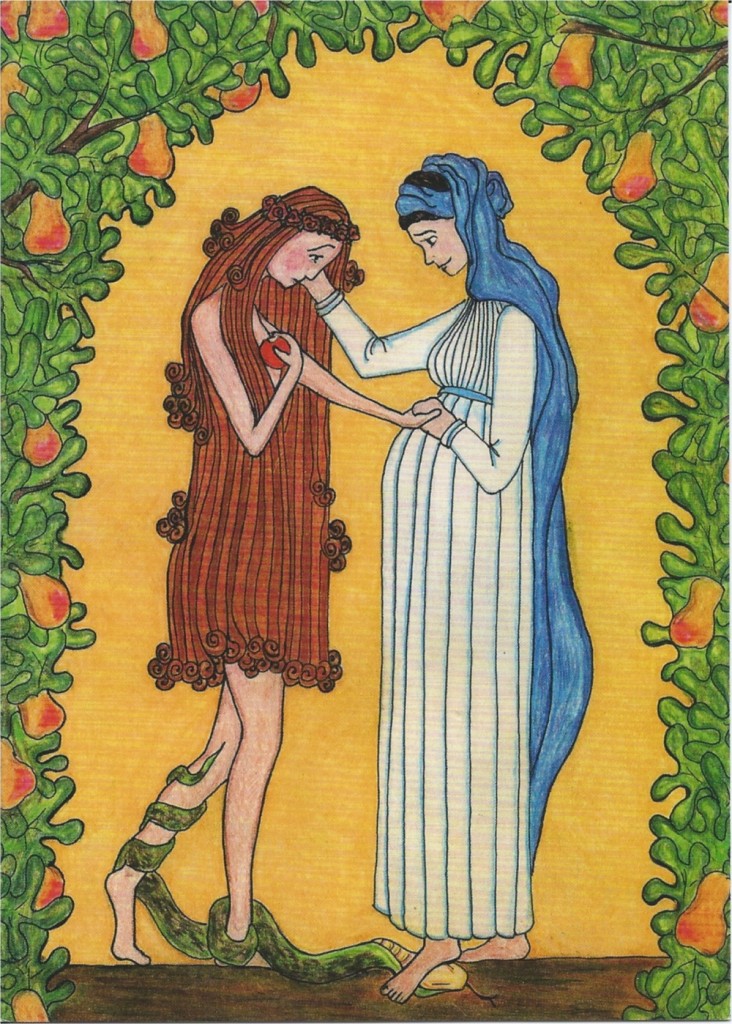
mary-and-eve
Sr Columba Guare © 2005 Sisters of the Mississippi Abbey

Continue reading “Why Did Jesus Come? For These Two Reasons…”

Why Christmas is on December 25th?

Christmas is coming soon, but why do we celebrate Jesus’ birth on December 25th? The Bible makes absolutely no reference to any date, and gives barely any information that could even hint at which season Jesus was born. So how did the Church land on December 25th as our celebration of Christ’s birth? The early evidence shows that it wasn’t until the late 2nd Century until people even started trying to figure out what date Jesus was born. Some Early Church leaders actually argued against trying to determine a date for Jesus’ birthday. Instead, the emphasis was on Jesus’ death and on the specific days and events leading up to his crucifixion and resurrection (since those details are given in Scripture).  Since there is so little information about Jesus’ birth, the Early Church was always content to simply emphasize the virgin birth without knowing when exactly Jesus was born.
Interestingly, the “12 Days of Christmas” comes from a disagreement regarding when Christmas should be celebrated.

christmas-star“The modern Armenian church continues to celebrate Christmas on January 6; for most Christians, however, December 25 would prevail, while January 6 eventually came to be known as the Feast of the Epiphany, commemorating the arrival of the magi in Bethlehem. The period between became the holiday season later known as the 12 days of Christmas.
Andrew McGowan

By the 300’s there were Christian groups regularly celebrating Christ’s birth on December 25th. Before then, the Christians either didn’t care to know Jesus’ birthday or they were still trying to come to agreement.

Continue reading “Why Christmas is on December 25th?”

What’s the Difference Between a D.Min and Ph.D?

Trevin Wax has recently offered his counsel for those considering a Ph.D. I really appreciated his post, because it’s something I’ve prayed about many times. In the end, I opted to pursue a D.Min. in “Ministry to Emerging Generations” through Gordon-Conwell Theological Seminary, which I completed in January of 2014. I had known that I would pursue a doctorate of some kind for a few years, but I was torn between Ph.D and D.Min.

Version 2There was a long time where I didn’t consider a D.Min a “real” doctorate and looked down on it as an imposter doctorate… something people get when they want the title “Dr” but they aren’t smart enough to get a Ph.D. Obviously, my opinion has changed.

My hope is that this post will help clarify the differences between a Ph.D and a D.Min while offering what I wish I had known going into the program. Continue reading “What’s the Difference Between a D.Min and Ph.D?”

Blog at WordPress.com.

Up ↑