Search

Living Theologically

theology and the Christian life

Suffering is the Furnace of Godliness


How can you trust a God who lets you suffer?

That’s a question many people simply cannot get over, and frankly… it’s a good question! The problem of suffering is legit and real and difficult. Rather than  attempting to “solve” the question, I hope to share what may be a fresh perspective.

If we approach the question of suffering with the expectation that God owes us happiness and comfort, then we need to admit we’re holding God to promises he never made. The “American Dream” is never promised anywhere in Scripture. In fact, there are many places where God promises his people they will suffer because of their righteousness. 

Romans 8:28-29 is a much-quoted verse to bring comfort in the midst of suffering. Often it is shared in a way that says, “God will make it all ok. It will turn out good for you.” But that isn’t what this passage says. In fact, it says something much better…

“And we know that for those who love God all things work together for good, for those who are called according to his purpose. For those whom he foreknew he also predestined to be conformed to the image of his Son….”

Like the silversmith who purifies silver in a furnace or with a blowtorch, the impurities come to the surface in the heat. When they are wiped away, the purified silver will reflect the silversmith’s face when he looks into it.

Suffering is the furnace of our godliness. It is the way God purifies his children so they reflect him more clearly in a sinful world. 

silversmithing
Continue reading “Suffering is the Furnace of Godliness”

How To Build a Reading Plan

Mature Christians are readers. It is more difficult to become a mature believer if you do not (or cannot) read… because God revealed himself through a book. The Bible is the Word of God, his self-revelation to humanity so that we would know who is he, what he’s done, how we can be made right before him, and where we’re heading.

Not all books are created equal, and you simply cannot read everything out there.

Join me in having a reading plan: whether it’s a yearly or quarterly focus. Here are some tips I’ve learned about reading, and questions I’m working through as I develop my reading plan for 2017.

books Continue reading “How To Build a Reading Plan”

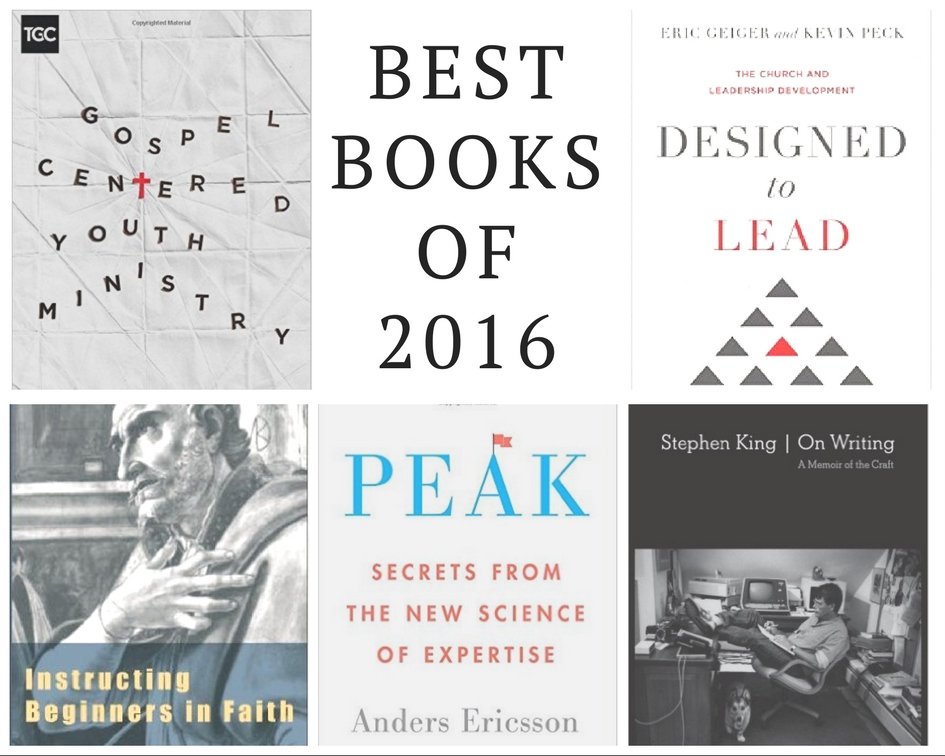
Top 5 Books I’ve read in 2016

It’s the final week of 2016 so I figure it’s time to share some of best books I’ve read year. Some of these were published this year, some were not.

If you’re thinking, “I don’t read books. Blogs are enough to keep up with, but books are too long,” then let me encourage you to stop reading this blog if it means you start reading good books again. Seriously, books are that valuable.

Mature Christians should be readers, for God made his Word available to us through the written word. Good books are are worth the investment… and this is why these type of lists are helpful (to keep you away from books that aren’t worth the time).

best-books-of-2016 Continue reading “Top 5 Books I’ve read in 2016”

Why Did Jesus Come? For These Two Reasons…

Who knew that sweet baby boy in the manger would be the most controversial human in history? More ink has been spilled about him than anyone else who has ever lived.

It’s so easy for us to lose sight of the divisiveness of Jesus. He’s one person with whom you can’t sit on the fence: you either believe he is the Son of God and the savior of the world, or you don’t. He is either who the Bible says he is, or he’s just another misunderstood teacher who got himself in trouble by criticizing people of power.

In the midst of all the wrapping paper and Christmas presents, we can easily forget the controversial nature of Jesus’ mission. He was not born simply to provide a nice example for people to follow.

The following are the specific verses where Jesus explicitly says why he came (as well as a few other relevant verses from the New Testament). May these remind you why Christmas is worth celebrating.

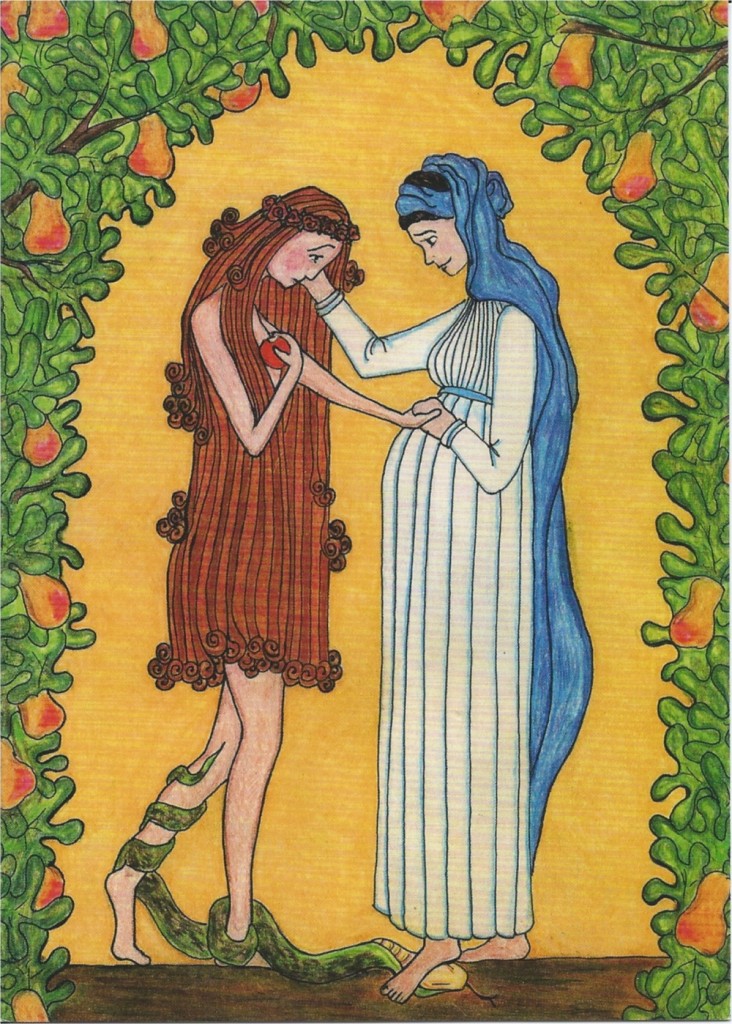
mary-and-eve
Sr Columba Guare © 2005 Sisters of the Mississippi Abbey

Continue reading “Why Did Jesus Come? For These Two Reasons…”

Why Christmas is on December 25th?

Christmas is coming soon, but why do we celebrate Jesus’ birth on December 25th? The Bible makes absolutely no reference to any date, and gives barely any information that could even hint at which season Jesus was born. So how did the Church land on December 25th as our celebration of Christ’s birth? The early evidence shows that it wasn’t until the late 2nd Century until people even started trying to figure out what date Jesus was born. Some Early Church leaders actually argued against trying to determine a date for Jesus’ birthday. Instead, the emphasis was on Jesus’ death and on the specific days and events leading up to his crucifixion and resurrection (since those details are given in Scripture).  Since there is so little information about Jesus’ birth, the Early Church was always content to simply emphasize the virgin birth without knowing when exactly Jesus was born.
Interestingly, the “12 Days of Christmas” comes from a disagreement regarding when Christmas should be celebrated.

christmas-star“The modern Armenian church continues to celebrate Christmas on January 6; for most Christians, however, December 25 would prevail, while January 6 eventually came to be known as the Feast of the Epiphany, commemorating the arrival of the magi in Bethlehem. The period between became the holiday season later known as the 12 days of Christmas.
Andrew McGowan

By the 300’s there were Christian groups regularly celebrating Christ’s birth on December 25th. Before then, the Christians either didn’t care to know Jesus’ birthday or they were still trying to come to agreement.

Continue reading “Why Christmas is on December 25th?”

What’s the Difference Between a D.Min and Ph.D?

Trevin Wax has recently offered his counsel for those considering a Ph.D. I really appreciated his post, because it’s something I’ve prayed about many times. In the end, I opted to pursue a D.Min. in “Ministry to Emerging Generations” through Gordon-Conwell Theological Seminary, which I completed in January of 2014. I had known that I would pursue a doctorate of some kind for a few years, but I was torn between Ph.D and D.Min.

Version 2There was a long time where I didn’t consider a D.Min a “real” doctorate and looked down on it as an imposter doctorate… something people get when they want the title “Dr” but they aren’t smart enough to get a Ph.D. Obviously, my opinion has changed.


My hope is that this post will help clarify the differences between a Ph.D and a D.Min while offering what I wish I had known going into the program. Continue reading “What’s the Difference Between a D.Min and Ph.D?”

What’s the Difference Between Roman Catholic and Protestant Christianity?

My wife is a teacher and has been asked many many times how she’s married to a priest. We live in New England, I am Irish, and I work in a church… therefore it’s natural for people to assume we are Catholic.

Gone are the days where Catholics and Protestants banish one another as inherently nonChristian, but we’ve also begun to overlook the legitimate differences in ways that are a bit worrisome. I know some Roman Catholics whom I consider true believers; and I’ve know some Protestants whose faith I question. Contrary to popular opinion, the Pope is not the main difference between the two. Ironically, there are normal Catholics whom I believe are “saved” even while the Pope is not.

The Five Sola’s of the Reformation serve as a good reminder about the foundational differences between the Roman Catholic Church and the Protestant Churches; especially since the issues the Reformers protested have not changed. These are not presented with anything other than a desire to clarify the difference between Roman Catholic Christianity and Protestant Christianity – there is no desire to spread judgment or animosity.

5_solas_challies Continue reading “What’s the Difference Between Roman Catholic and Protestant Christianity?”

Four Motifs for Sharing the Gospel

The gospel is the greatest news and it is the Christian’s honor to announce it to all people everywhere… if only it was that easy. So often, we simply don’t know how to “bring it up” or deal with the rejection.

As we read through the book of Acts, we see how the apostles preached and applied the gospel in their ministries and there’s much to learn. I am particularly fond of Paul’s example in Acts 17 where he’s in Athens, the academic and philosophical center of the Roman Empire.

Christians today can learn from Paul’s example, discerning which “Gospel Motif” connects with the people to whom he is ministering, and then using that motif to lead them towards the gospel.

walk Continue reading “Four Motifs for Sharing the Gospel”

Why is Temptation so Enticing (and how to overcome)


Temptation is enticing. Why else would restaurant menus use descriptions of their deserts like, “A tempting combination of rich chocolate and smooth caramel.” If sin was never tempting, we’d never do it. But there’s something that grabs us and pulls us into the promise of sin, and next thing we know we’ve given in.

If a Christian wants to overcome temptation, he or she needs to recognize how temptation works. When you understand how temptation works, then you can be better prepared for where it may be lurking to overtake you.

In many ways, this is part two of last week’s article unpacked the two types of sin: Sins of Commission (doing something you’re commanded not to do) and Sins of Omission (not doing something you’re commanded to do). If you haven’t read the other article, you may find that helpful as well.

be-killing-sin Continue reading “Why is Temptation so Enticing (and how to overcome)”

Blog at WordPress.com.

Up ↑