Search

Living Theologically

theology and the Christian life

Tag

Creation

Suffering is the Furnace of Godliness


How can you trust a God who lets you suffer?

That’s a question many people simply cannot get over, and frankly… it’s a good question! The problem of suffering is legit and real and difficult. Rather than  attempting to “solve” the question, I hope to share what may be a fresh perspective.

If we approach the question of suffering with the expectation that God owes us happiness and comfort, then we need to admit we’re holding God to promises he never made. The “American Dream” is never promised anywhere in Scripture. In fact, there are many places where God promises his people they will suffer because of their righteousness. 

Romans 8:28-29 is a much-quoted verse to bring comfort in the midst of suffering. Often it is shared in a way that says, “God will make it all ok. It will turn out good for you.” But that isn’t what this passage says. In fact, it says something much better…

“And we know that for those who love God all things work together for good, for those who are called according to his purpose. For those whom he foreknew he also predestined to be conformed to the image of his Son….”

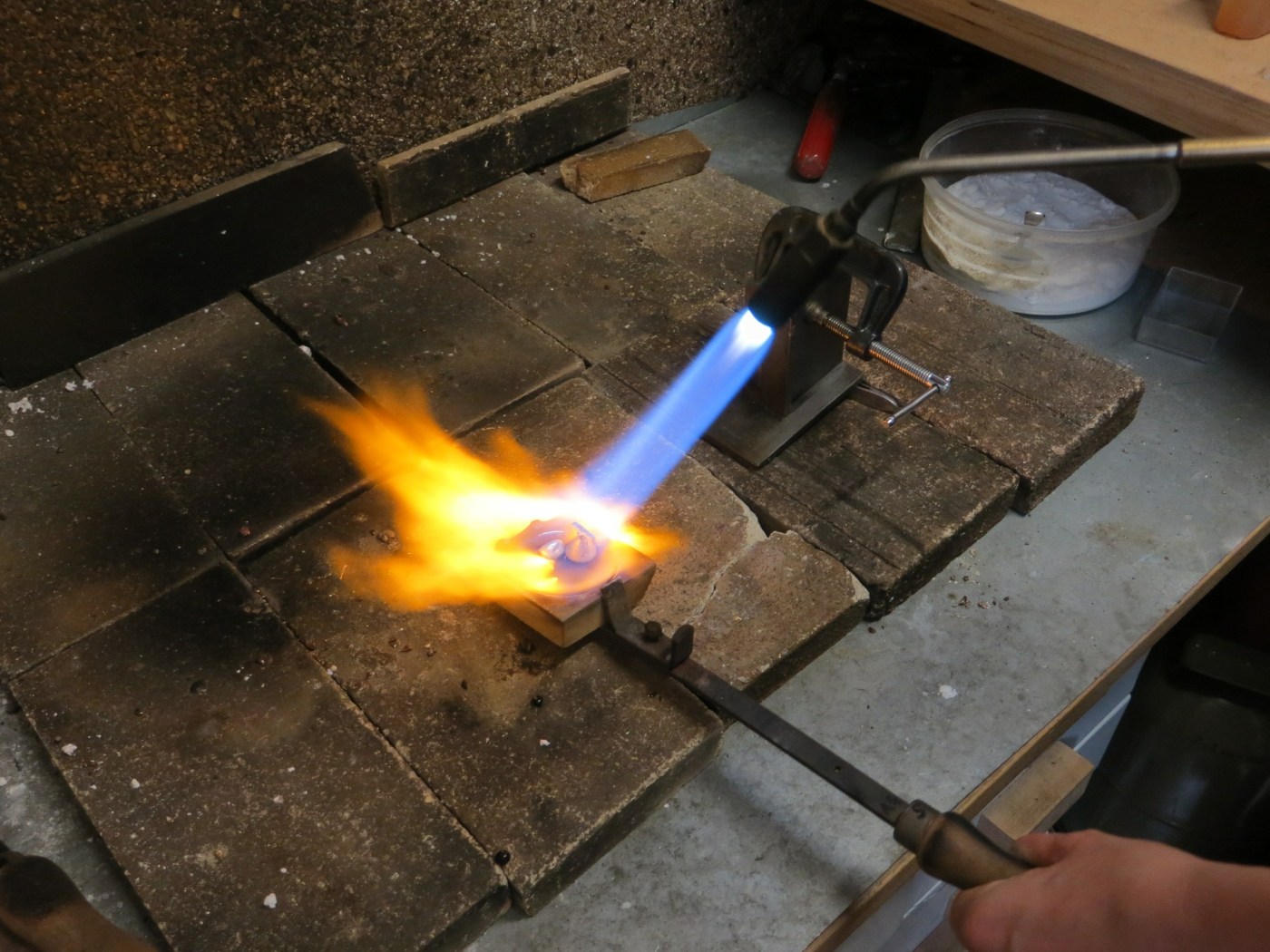
Like the silversmith who purifies silver in a furnace or with a blowtorch, the impurities come to the surface in the heat. When they are wiped away, the purified silver will reflect the silversmith’s face when he looks into it.

Suffering is the furnace of our godliness. It is the way God purifies his children so they reflect him more clearly in a sinful world. 

silversmithing
Continue reading “Suffering is the Furnace of Godliness”

What Does it Mean to Be Created in God’s Image?

There are some who say humans are simply another creature among animals. They say we’ve evolved and risen to the top of the evolutionary pyramid. We aren’t the strongest, fastest, or the most powerful. What is it about humanity that makes us stand out as unique and different from the rest of creation?

According to the Scriptures, we were created “in God’s image,” and that sets us apart. Many Christians “know” that. It’s something that Christians all affirm: humans are the crown of creation, the only ones in creation with the honor of being created in God’s image. But what’s it mean? How would you describe it to a child who asks?

What I’ve written below is presented as an overview of the general topic to point you in the right direction, not clarify every issue in play. Still, I’m convinced it will be useful enough that you’ll be able to explain what it means to be created in the image of God.messy-mirror Continue reading “What Does it Mean to Be Created in God’s Image?”

Christian Views on Creation: A Short Summary

Time for another reader question. You can submit your question HERE:

Hi Mike! I have always struggled with the topic of creationism, as I know there are many different types. I don’t know were to start with researching them, but I feel like I should know a lot more about it than I do (especially where I’m taking lots of science classes at college). Any suggestions on what to do? I’m a little lost.

earth

Thanks for your question, it’s an important (and common) one. As we consider the glory of creation and the complexity of understanding HOW God created, I want us to keep a few things in mind:

  1. Science is Good: Unfortunately, the stereotype of religious folk is that we are unscientific. Most of Western history’s greatest scientists were faithful Christians who practiced science as a way to explore God’s good creation. Many of these people were actually funded and sponsored by the Church. Today, however, people have replaced faith in God with naturalism, which says, “If I can’t physically and scientifically prove it, then it isn’t real.” Science is good, Naturalism is not. The scientific method is the creed of the naturalist, just as the Bible is the authority for the Christian.
  2. Multiple Interpretations: Scientific data is often debated. There isn’t always one clear and obvious conclusion. Multiple scientists often draw different interpretations and conclusions from the same information. The popular voice isn’t always correct. Without room to debate interpretations, the best-funded voice will always prevail. This cuts both ways, and we need to be willing to learn from those with whom we disagree.
  3. Science is Limited: Obviously, a Naturalist will disagree with this statement, but it’s important to put up front. If you believe there’s more to reality than what we can empirically test, then you will draw different conclusions from the scientist who believes “it’s only true if you can scientifically prove it.” We will never understand everything. We aren’t supposed to. However, that’s not an excuse to disregard science. Science teaches us amazing things about our world, so take it seriously, but remember it cannot answer all questions.
  4. Adaption & Evolution: No one denies adaptation. Even the most literal 24-hour day creationist confidently agrees with significant amounts of adaptation within species (see HERE for an example). Adaptation and evolution within species makes good scientific sense to everyone. The debate revolves around whether or not one species can evolve into a new species, especially regarding the origin of humanity.

Continue reading “Christian Views on Creation: A Short Summary”

Blog at WordPress.com.

Up ↑