I love getting questions from readers. Here’s the latest question I’ve received (you can submit your questions HERE
There are many times in Scripture where Paul specifically seems to give conflicting advice. One that always gets me:
1 Corinthians 9:22 – “To the weak I became weak, that I might win the weak. I have become all things to all people, that by all means I might save some.”
In Acts 21:17-26, Paul goes and joins the four men in their purification rites, so people can see his still observes the old Jewish customs, even though he doesn’t think they’re necessary. This is kind of all the same strain.
Romans 12:2 – “Do not be conformed to this world, but be transformed by the renewal of your mind, that by testing you may discern what is the will of God, what is good and acceptable and perfect.”
If I’m allowed to re-ask the question, I’d put it this way: Is Paul a ministry hypocrite who tells one group one thing and then another group another thing? Let’s look at these individually and then tie them together…
A gospel-centered testimony can be a powerful way to share the good news of Jesus Christ with your nonChristians friends (or with complete strangers, as opportunity arises). Over the last decade I’ve heard some people talk about testimony-sharing as “the key” to good evangelism while others decry testimonies as man-centered rather than God-centered.
What is a Testimony?
Your testimony isn’t your autobiography. It isn’t your life-story or an opportunity to talk about the details of your sinful life before Jesus in order to gain “street cred” with nonChristians.
The word “testimony” comes from the same root word as “martyr.” To be a martyr is to testify and tell about what God has done through Jesus Christ. It isn’t first about you, it is about God. When you share your testimony, you are talking about what God has done and what God has done for you. It is both objective (who God is and what He’s done) and subjective/personal (what he’s done for you). Unfortunately, I’ve heard many testimonies that only emphasize the subjective (what God has done for them).
A testimony that isn’t about Jesus, the cross, the resurrection, and the freedom that comes through confession of sin and repentance isn’t a gospel-centered testimony.
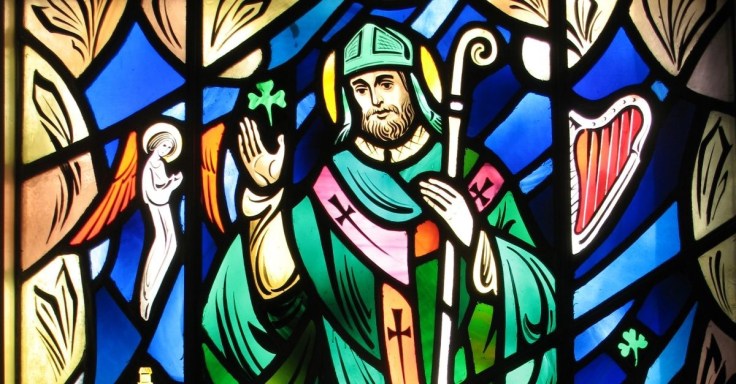
I live 25 miles from Boston, am Irish, and yet I never knew anything about St. Patrick growing up, other than assuming he was some Irish priest who made everyone feel obliged to wear green to school.
But Patrick wasn’t even Irish – he was English. When he was 16 he was kidnapped by pirates and sold into slavery to the “barbarians” in Ireland where he tended sheep for his master. The years of isolation while tending sheep he spent countless hours in prayer and meditating on what he had been taught as a child.
Patrick eventually escaped, through God’s providence, and made his way safely back to his home, where he enrolled in Seminary and later became an ordained Roman Catholic priest. After a number of years, God spoke to Patrick in a dream and told him to return to the barbarians of Ireland and to preach the Good News of Jesus Christ to them and teach them to live for Christ.
Patrick sold all he had and went to Ireland as a missionary. He would travel with important chieftains orpay for safe passage to ensure his safety and protection. He spent time with the people in various tribes to learn about their particular culture (music, art, stories, etc.) in order to communicate important biblical truths in understandable ways – the most well known example of this is Patrick’s use of the shamrock as an example of the Trinity (three leafs, one shamrock; three Persons of the Trinity, one God).
He built simple churches, baptized and trained men who had converted from paganism to Christianity and appointed them as priests for their tribes. After a church was established and priests were appointed he would move to the next tribe and faithfully present the Good News of Jesus Christ there.
Patrick was a godly man who loved the gospel of Jesus Christ so much he went to his former-captors. His ministry played a history-shaping role in Ireland, and it was all because of his commitment to take Jesus’ promises and commands seriously. He loved his enemies, and he went to make disciples of all nations because he believed the Holy Spirit would be with him.
This is the life of the man whom we honor on St. Patrick’s Day every year. It is most ironic that he returned to Ireland to teach them to flee their ungodliness, and on the day we “honor” him we seem to return to exactly what he sought to rescue men from. If you want to honor St. Patrick this year, tell someone about Christ and invite them to repent of their sin and receive the forgiveness of sin.
I want God to use me. I want to make an impact in some way on the world and in those who know me. I know I’m not alone. You probably want the same thing.
As we pursue our callings in this world, it’s wise to remember that God is actively at work in the life of the normal Christian in ways that far surpasses what we read about in the Old Testament.
That’s a bold statement, and while it’s a very broad and general one, I think it’s accurate because the Holy Spirit did not live in anyone before Pentecost. In the Old Testament, the Holy Spirit “came upon” people and empowered them to do certain things, but Pentecost brings a significant change in the work of the Holy Spirit.

There are many times in Scripture where Paul specifically seems to give conflicting advice. One that always gets me:





 Living Theologically