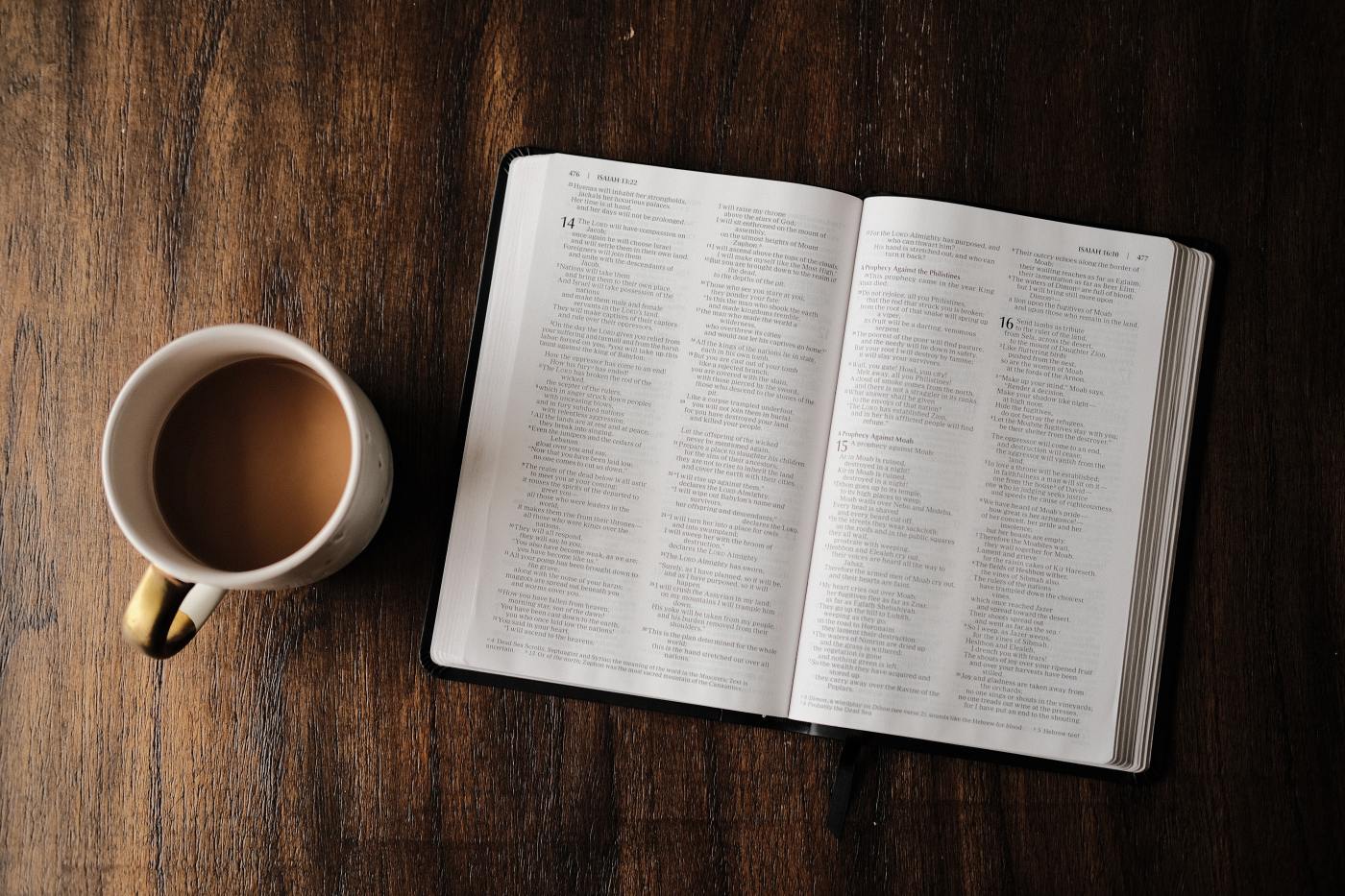
“Read your Bible.” It’s common advice to hear in church. Let’s pretend that you’re a new Christian hearing this advice, so on Monday morning you wake up half an hour early to do it. As you sit at the kitchen counter and set your english muffin and coffee down, you grab your Bible to wonder… “Ok, what now?”
This raises a very practical question that I’m concerned we often overlook in church. Maybe we’ve told people what they’re supposed to do, and maybe we’ve even persuaded them to want to do it… but have we equipped them to know how to actually do it? In a previous post I covered a few basic ideas about How to Read Your Bible, but in this article I want to give four different methods that can help you realistically start reading your Bible. For other options, check out this post from my friends at LeaderTreks, How to Teach Students to Study the Bible.
Four Important Questions
These are four helpful questions to ask when studying the Bible. Usually, it is most effective to use these questions with a journal at-hand so you can write down some basic thoughts and reflections along the way.
- What? Understand the original meaning. This involves working through basic “Who? What? Where? When? Why? How?” types of questions. Resist the urge to jump into application until after you’re sure you know what this Scripture passage actually means.
- So What? Next, uncover the teaching of the passage. Do this by asking questions like, “What was the author trying to say to the original readers?” and “Of all the things that could be included in Scripture, why is this in here?”
- Where’s the Gospel? Since all Scripture is about Jesus (Luke 24:25-27), any understanding of a passage that overlooks its relationship with Jesus is an incomplete understanding. Does this passage foreshadow the type of salvation God would offer, or display people’s failure to save themselves, or highlight our sinful depravity and need for salvation? For more on this, see Bryan Chapell’s article 4 Ways Your Whole Bible Points to Jesus or The Bible Project’s ebook The Scarlet Thread Through the Bible.
- Now What? Now it’s time for explore what the passage means for you. Based off the first three questions, what can you learn about God, yourself, the world, and the Christian life? Consider both general and specific ways this passage should shape your head/thoughts, heart/emotions, and hands/actions.
Read Until You Hit The Next Lightpost
When non-runners want to become runners, one of the common methods they employ is to run the distance between a lightposts, then walk to the next light post, then keep repeating until they’re able to run the distance between two lightposts, then three, etc. When people start reading the Bible, it’s helpful to follow a similar approach. Instead of starting off with an in-depth approach, simply read until you reach something worth chewing on. Keep a journal to write down some notes. Turn your reflections and meditations on that keyword or idea into a prayer.
Bible Journaling
Find a fresh journal, a comfortable pen to write with, and your Bible. After reading a passage through, probably two or three times, write out a key verse or phrase that stands out to you. In your journal, write about why it catches your attention. More importantly, write about what that verse or phrase actually means in the text, not just about how it makes you feel. One of the benefits of journaling is it can guide us into deeper reflection, even if our mind tends to wander from time to time – once you get back on track, simply resume where you left off.
It may also be a helpful practice to write out your prayers. Using the pages at the end of your journal, you can create a list of prayer requests others have shared with you, along with the date when you entered it. Then, during your Bible reading time you can journal about the Bible passage on the front of a page, and then write out your prayer (with the prayer requests in the back to remind you who to cycle through in your prayer-list) on the back-side of that same page. Remember, you aren’t writing a book, so don’t feel pressure to write significant amounts or use perfect grammar. The chances of anyone else reading what you write is very very slim – so resist the temptation to write as if you’re writing the next “My Utmost for His Highest” or anything like that. Simply read your Bible, write out your meditations, and pray.
Study a Book of the Bible
If you are interested in studying a book of the Bible or a portion of Scripture (like the Sermon on the Mount) over the course of a month, this may be a helpful method to consider.
- Read it in large sections quickly. If possible, set aside time to read it through in one sitting, potentially two days in a row. This will help you see the big picture.
- Read it in medium-sized sections. Slow down the reading by reading through chapters or other medium-sized sections of the passage in order to dig into the different emphases throughout the book.
- Read small portions very slowly. By slowing down to read just a few verses at a time, you’ll pay careful attention to key words that stand out. At this level it is especially helpful to pay attention to conjunctions (if, therefore, because, but), because they connect the various sections together.
Whichever method you choose, reading the Bible consistently over a long period of time will be of immense benefit to your soul.


 Living Theologically