Search

Living Theologically

theology and the Christian life

Category

Theology

Theology of Glory and Theology of the Cross: Reflections on Maundy Thursday & Easter

Maundy Thursday was a busy day. 

In one regard, it’s the day when everything fell apart for Jesus. He lost everything. His disciples, his ministry, his safety. All gone. 

And yet…

We know the bigger picture. Jesus himself described this night as the hour for which he came. The time had come for him to be glorified… even though that didn’t look anything like what the people were expecting. 

Let’s be honest: Who would’ve devised the cross as God’s way of salvation? 

None of us. 1 Cor. 1:18 says, “For the word of the cross is folly to those who are perishing, but to us who are being saved it is the power of God.” Viewed from the inside, the gospel is full of power and beauty, but from the outside it’s confusing and even foolish. Why would God save people like that?!

In this way, the gospel is like the stained glass windows in a cathedral. When viewed from the inside they shine with beauty, portraying the message of the gospel; but from the outside they are dark, dull, and confusing.

Many of us want a theology of glory, not a theology of the cross. We want God on the centerstage, with the spotlight shining, highlighting all the ways that he’s amazing… and when we follow him then we join him on that stage. This theology of glory only sees suffering as a way for God to show his power for healing, rather than as the way God displays his goodness and beauty – even in the valley of the shadow of death. Our treasure is Christ, not the glory we receive because of him. 

A theology of the cross leads us through Maundy Thursday, where we follow Jesus, even though it leads us to the cross. 

That’s why Judas betrayed Jesus in Gethsamane and why the crowd chose Barrabbas. They wanted a revolutionary. Jesus wasn’t the Messiah he expected – or wanted. I think it’s helpful for us to remember everything we’ve read tonight and consider just how unexpected it was to those who experienced it. 

Their hope was for the Messiah to restore Israel’s glory, kick out the Romans, and return Israel to the prominence and power they had under King David. This is why, just before Jesus ascended to heaven the apostles asked him, “Lord, are you restoring the kingdom to Israel at this time?” (Acts 1:6). They expected a new conquest, like they had under Joshua. But the gospel is not a battle cry, it’s an invitation to find rest. 

Jesus showed his power and worthiness, but he did so by experiencing death and defeating it from the inside-out. Rather than taking down the Romans he sent his disciples into the world… not with a sword, but with the cross – not to pursue a holy war, but to proclaim the gospel to those near and far. 

Maundy Thursday was a busy day. Tonight’s readings remind us just how much happened on this day. 

Jesus’ hour to be glorified had come, and it wasn’t what anyone expected. In a way, it’s appropriate for Maundy Thursday to fall on April Fool’s Day. Not for the sake of jokes about how Jesus fooled anyone by dying and resurrecting on Easter morning, but because the Gospel really is foolishness to those who don’t understand it. 

Why would God save sinners by dying? Why wouldn’t Jesus choose to come and live and teach and die when it could be livestreamed for all people around the world to see his face and hear his voice and witness his resurrection? Why did God do it this way, relying on imperfect Christians to proclaim the gospel to friends and strangers, near and far? 

Ultimately, I can’t really answer that… except to remind you that “to us who are being saved it is the power of God.” God’s ways are not our ways…

Although some may call it foolish, “I am not ashamed of the gospel, for it is the power of God for salvation to all who believe.” (Rom. 1:17)

(note: this post is a manuscript from a sermonette for my church’s Maundy Thursday service and has been lightly edited)

Additional Reading:

Why it’s Good News that God Doesn’t Change

During this pandemic when everything is changing, we need a solid rock on which to stand. A steady and reliable foundation for life, for peace, for hope. This is why it is unexpectedly good news that God does not change.

If there’s anything that 2020 has taught us, it’s that no one can predict the future. Life changes so quickly today. Nothing is built to last. Planned obsolescence is baked into our culture. Trending news becomes next week’s ancient history.

We need something (or someone) that does not change, and yet remains true, powerful, and life-giving. This is precisely why it is good for Christians to consider the immutability of God.

The Immutability of God

“Immutability” means God does not change. This is considered an incommunicable attribute, something that is true about God’s nature that is not true of our human nature.

This about it this way: if something is perfect, any change only makes it worse. If God’s holiness changes, then he is less holy. If his omniscience changes, then he knows less. If his sovereignty changes, then he isn’t truly in control.

Consider the follow passages in Scripture.

“I am who I am.” (Exodus 3:14)

“I the Lord do not change. So you, O descendants of Jacob, are not destroyed.” (Malachi 3:6)

“Jesus Christ is the same yesterday and today and forever.” (Hebrews 13:8)

“Every good and perfect gift is from above, coming down from the Father of the heavenly lights, who does not change like shifting shadows.” (James 1:17)

God’s immutability does not mean he is disconnected from our lives. He is not standing far off, as an unmoved observer. Instead, it means the full breadth of God’s attributes are perfect, infinite, and eternal – including his love and compassion and mercy and grace.

God Will Not Love You More Tomorrow Than He Does Today

Do you remember the old song that says, “I love you more today than yesterday… but not as much as tomorrow.” That’s a nicely romantic sentiment. But God cannot sing that song.

God’s love for his children is perfect, infinite, and eternal. It is impossible for it to grow in perfection, because it is God’s holy, steadfast love.

If his love changes, there are only two options: he either loves us less today than he did yesterday, or yesterday’s love was imperfect and he’s improved it today.

As Romans 5:8 teaches, “God demonstrates his own love for us in this: while we were still sinners, Christ died for us.” The immutable love of God compelled God the Son to become a man, live among us, endure betrayal and die a painful death in order that sinners could be adopted as children of God.

This is the love of God that does not change. When uncertainty abounds and change seems to be lurking around every corner, you can stand upon the unchanging, solid rock.

Are Christians “Spiritual but not Religious?”

“I’m spiritual but not religious.”

“Christianity is a relationship, not a religion.”

These are statements most of us have probably heard. The question for today is this – are these Christian statements? The gospel offers a different perspective on religion and spirituality that’s worth considering.

What Does it Mean?

When people say “I’m spiritual but not religious” it can mean a host of things. It can mean “I pray and consider myself a Christian, but don’t go to church,” or “I believe in Jesus, but not in Christianity,” or “I believe in a higher power, but think religion only creates unnecessary division.”

While there are endless combinations of “I believe in _____, but ______” the core remains the same: I don’t want any part of organized religion. Whether you think it’s simply unnecessary, or maybe you believe it’s actually evil, the personal result is the same.

The statement in question is more about what you’re against than what you’re for. And “spiritual” can mean pretty much whatever you want it to, so it’s a perfectly nebulous word if you don’t know what you actually believe.

Can Spirituality and Religion Actually be Divorced?

I think about spirituality and religion like driving and a vehicle – one drives the other, but not vice-versa. Wherever there is spirituality, there is some form of religion: Christianity, Islam, Buddhism, Atheism, New Age’ism, etc. Spirituality requires religion the same way driving requires a vehicle (car, truck, motorcycle, speedboat, bicycle, etc). It can take many forms, but the ideas behind the spirituality come from somewhere.

Religion, however, can be quite devoid of spirituality. Most of us likely know people who go through the motions of religiosity with very little spiritual belief. Go to church, give your money, refrain from certain foods, etc… but there is no passion in their prayers, not faith in God to provide, and no internal drive towards giving grace towards those who need it. These religious folk are like cars in a junkyard. They’re still cars, but they aren’t going anywhere without significant reconstruction.

Christianity: Spiritual and Religious

Let’s be clear: No one ever has been, and no one ever will be, saved because of their religiosity. The Bible itself has strong words regarding those who are religious but faithless.

“I hate, I despise your feasts,
and I take no delight in your solemn assemblies.
Even though you offer me your burnt offerings and grain offerings,
I will not accept them;
and the peace offerings of your fattened animals,
I will not look upon them.
Take away from me the noise of your songs;
to the melody of your harps I will not listen.
But let justice roll down like waters,
and righteousness like an ever-flowing stream.”
Amos 5:21-24

“You hypocrites! Well did Isaiah prophesy of you, when he said:
This people honors me with their lips,
but their heart is far from me;
in vain do they worship me,
teaching as doctrines the commandments of men
.’”
Matthew 15:7-9 (Jesus, quoting from Isaiah 29:13)

The gospel proclaims grace to sinners, through faith in Jesus Christ. Romans 7 emphasizes the relationship between religion (“the law”) and faith. God’s Law is good because it shows us our need for God’s grace, which comes through Jesus. He perfectly fulfilled the Law (what theologians call his “active obedience”), and his righteousness is applied to Christians by the Holy Spirit when they confess their sin and profess their faith in who Jesus is and what he has done.

Salvation isn’t a “freedom from religion” in the sense that we become “spiritual but not religious.” Instead, it transforms our understanding of what religion was meant to be all along.

Christians are religious people. But they’re also spiritual. They participate (joyfully!) in organized religion. They happily become members of local churches, give their money as an expression of faith in God to provide, submit themselves to spiritual leaders, and pray for wisdom regarding big and small decisions in life.

The Christian life is a spiritually-religious life.

Don’t fall into wise-sounding platitudes that actually undermine the ministry of the gospel by breeding suspicion against the church. Christians are not spiritual-but-not-religious. No. The Christian life is a spiritually-religious life.

When Should Kids Take Communion?

Before digging into this important question, let me unequivocally state that this post reflects my personal opinion and in no way represents my church’s official opinion. Also, please respect this is obviously coming from a Baptist’s perspective without turning the comment section into a debate over infant baptism versus believer’s baptism.

After years of reflection on this question, as both a youth pastor and as a father, here is where I’ve landed.

What Does Communion Mean?

Communion, or the Lord’s Supper, is an ordinance of the Church. That means it’s something Jesus directly instructed his disciples to do when they gather for worship. The instructions for Communion are given in 1 Corinthians 11:17-34, based off Jesus’ celebration of Passover with his disciples in Matthew 26:17-35.

Communion is anchored in the Jewish celebration of Passover. Whereas the firstborn sons of Israel were spared from death because of the sacrificial lamb, the children of God are saved from sin and death through the death and resurrection of Jesus Christ – the lamb of God. When we celebrate communion, the bread symbolizes the flesh of Jesus, which was broken for us; and the cup (usually grape juice, but some traditions still use wine) represents the blood of Jesus, which was poured out for us on the cross.

When Christians partake in Communion they are experiencing a physical reminder of their salvation. Jesus’ body was broken, and his blood was poured out. Christians are not saved from sin and death because they are better than anyone else, but because of the death and resurrection of Jesus Christ alone.

Not only does Communion look back at the foundation of the Christian’s salvation, it also looks forward to its fulfillment at the “wedding supper of the Lamb.” On that day, when Jesus returns in glory, all believers will partake in a great celebration of our salvation’s fulfillment. The great enemy will be utterly defeated and all God’s promises, secured through Christ’s resurrection, will be visible.

Communion is so much more than a nice snack break towards the end of church.

Relationship Between Baptism and Communion

It is obvious from the Scripture referenced above that Communion is meant as a regular part of Christian worship. On the other hand, baptism is a one-time-only experience.

Baptism symbolizes the Christian’s conversion and their adoption into the family of God. As Romans 6:4 says, Christians have died to their sins (been immersed beneath the waters) and raised into newness of life (lifted up, out of the waters). Our baptism unites the believer with the death and resurrection of Jesus Christ as they publicly aligns themselves with Jesus Christ. It is the rite of entrance into Christ’s Church. This is why most churches have some type of formal processes for baptism, in order to be assured that the person being baptized is a genuine convert.

Whereas conversion happens once in a person’s life, the Christian needs regular reminders of the source and fulfillment of their salvation. This is where Communion comes into play. When the church celebrates Communion, it is usually prefaced with comments marking it as something that is only for Christians to partake in because it is a reminder of the gospel.

To put it another way, Baptism symbolizes the Christian’s Justification while Communion reflects Sanctification.

Readiness for Communion

The Apostle Paul makes it clear that Communion should be treated with great reverence. He even says that some are suffering discipline from the Lord because they are treating Communion so casually, and they are taking it unworthily. Generally speaking, most Baptists are far too casual regarding the ordinances of Baptism and Communion.

Whoever, therefore, eats the bread or drinks the cup of the Lord in an unworthy manner will be guilty concerning the body and blood of the Lord. Let a person examine himself, then, and so eat of the bread and drink of the cup. For anyone who eats and drinks without discerning the body eats and drinks judgment on himself.

1 Corinthians 11:27-29

This means that Christians today should continue to be sure they are approaching Communion with reverence and faithfulness to the Scriptures. Christian leaders who allow anyone to partake in communion may believe they are erring on the side of grace, but they may actually be allowing well-intended participants to enter into spiritually-dangerous territory.

If someone is not ready to be baptized, why would they be ready for Communion? Since baptism is the ordinance of conversion, it should come first. I fail to see any reason a child or teenager who has not been baptized should be encouraged to take communion – it’s a confusion of theological categories. It is the theological equivalent to a boyfriend and girlfriend cohabitating before marriage because they “aren’t ready” to be married… if that is true, then they aren’t ready to live together either. Sometimes, the order of things matters.

Certainly, it is possible for children to profess faith in the gospel of Jesus Christ, and therefore they can understand what Communion represents. But the genuineness of their faith and their understanding of the gospel should first be tested and affirmed through baptism.

Why “Thanos to Theos”

Thanos to Theos is the name of a new podcast I’m cohosting with my friends Kevin Yi and Clark Fobes. It’s been an idea we’ve batted around for nearly a year, and we finally pulled it together and started recording episodes around the time quarantine began.

The vision for Thanos to Theos is to talk look into the world of comic books (hence, Thanos) through the lens of the gospel to better understand our own world (that’s the Theos… Greek for “God”). There are enough podcasts about theology and culture and youth ministry, so we’re bringing them together through our own shared love for comics.

Some episodes will lean more towards the “Thanos” side of things and be comics heavy, while others will be more “Theos” oriented and will focus more on theology and culture. All of this is offered for youth workers to help you think biblically about our world and about student ministry.

As a medium, comic books are generally seen as something you should outgrow by the time you’re in high school. But we’ve found that’s just not true. There are solid and meaty insights into the human condition written into those stories, and they’re worth considering. Afterall, if Narnia and the Shire and Hogwarts can teach us something about life in the real world, why can’t Marvel and DC do the same?

So tune in and subscribe through your preferred podcasting app. I’m confident that you’ll find the conversation entertaining and interesting, even if you’ve never been a comic book person.

Finally, a huge thanks is owed to the Rooted Ministry for hosting us and making this dream happen. Rooted is an incredible ministry promoting gospel-centered youth ministry and has recently launched the Rooted Podcast Network, including Ask Alice, All About Boys, Thanos to Theos, and the Rooted Podcast. Learn more on their website and give these other excellent podcasts a subscribe while you’re at it.

When Your Professed & Actual Theology Aren’t the Same

In my last post, Living My Theology, I made a distinction between our professed theology and our actual theology. Professed theology is composed of those theological truths we make, saying, “This is what I believe.” While “actual theology” consists of those theological truths that actually shape our daily living. The previous post give more examples of what this looks like. This post reflects on why there’s a difference at all. 

We want to live with our faith in Christ integrated into every sphere of life. The reality is, we don’t. At least, not perfectly. Sometimes there’s a wide chasm between the two because we’ve relegated faith to only “spiritual” things, and other times there’s a gap because we simply aren’t fully sanctified and indwelling sin keeps us from living perfectly aligned with our faith. In this post, I want to reflect on these two reasons why there’s a difference between our professed and actual theology. 

Fragmented Faith: Where the Difference is Unhealthy

When self-professed Christians live in a way that their faith has little impact on their daily life, what they’ve actually done is lock Jesus in the basement. People don’t live in the basement, they usually use it for storage when needed. It’s where we keep our “extra’s.” When they need something “spiritual,” they go down to the basement to get it, then continue with their lives in the places where real life happens.

Some Christians, especially from an older generation, view their faith as something so private they will not talk about it with others. Instead, they prefer to “live their faith.” But what this actually does is turn faith into a religion of good works. It takes all the intimacy and spirituality out of faith in exchange for external behavior changes that don’t require conversations about the amazing love of God.

Others call themselves Christians but have never understood how their faith connects with real life. So they sleep with their boyfriend/girlfriend, give little attention to personal holiness, and rarely worship with the family of Christ. Their faith is a fragment of their life, not integrated into the whole.

Growing into it: Where the Difference is Healthy

Some Christians will take the challenge to evaluate their professed and actual theology only to conclude they are in good alignment. The rest of us are able to recognize areas where we aren’t. 

faith is like receiving your father’s favorite pair of shoes that you just don’t fit into. You can step into them, and you can walk around in them, but they’re simply too big. But over time, you grow into them.

In this sense, faith is like receiving your father’s favorite pair of shoes that you just don’t fit into. You can step into them, and you can walk around in them, but they’re simply too big. But over time, you grow into them. Obviously, this isn’t a perfect example. It breaks down in many ways. But in this sense, I find it helpful: saving faith requires us to profess certain things that we simply haven’t “grown into” yet. 

I am not yet holy, and yet I have received the holiness of Jesus Christ. I have been saved from my sin, and yet I continue to battle temptation – sometimes in victory, other times not so much. I am a man of faith, and yet I sometimes pray, “Lord, I do believe. Help my unbelief.” I’m still growing into my faith. And you are too. We’ll be in those “too big” shoes until we graduate into glory. 

What Calvinism Isn’t

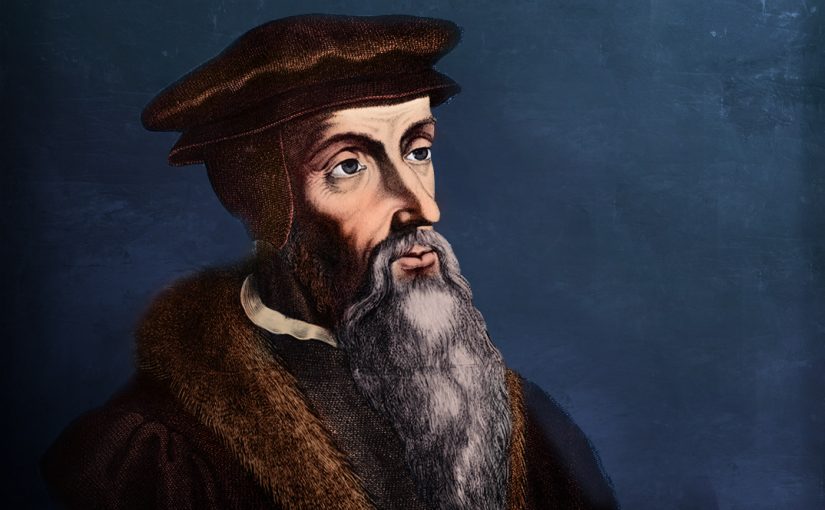
The first time I heard the name of John Calvin was in my high school Social Studies textbook, and it wasn’t a positive introduction. It said something about his belief that people were fundamentally bad and that God chose to love some but not others. Maybe it said more than that, but I don’t remember. What I do know, is I immediately disliked him and wondered how anyone could like this Calvin fellow.

Calvinism is a dirty word in many circles. Even among Calvinists, being called a “Calvinist” can seem like something of a slur. I have already explored some of the path that led me to embrace Calvinism, so I won’t do that here. I also don’t want to write in order to try persuading others to change their doctrinal positions. This article addresses some stereotypes of Calvinists and focuses on what Calvinism isn’t while next week’s article will highlight what Calvinism is.

john calvin Continue reading “What Calvinism Isn’t”

Was Jesus Born in a Barn, Cave, or House?

walter-chavez-300070-unsplash

Update 12/5/21: This post has been slightly edited and republished on my new website… you can read it here on Youth Pastor Theologian

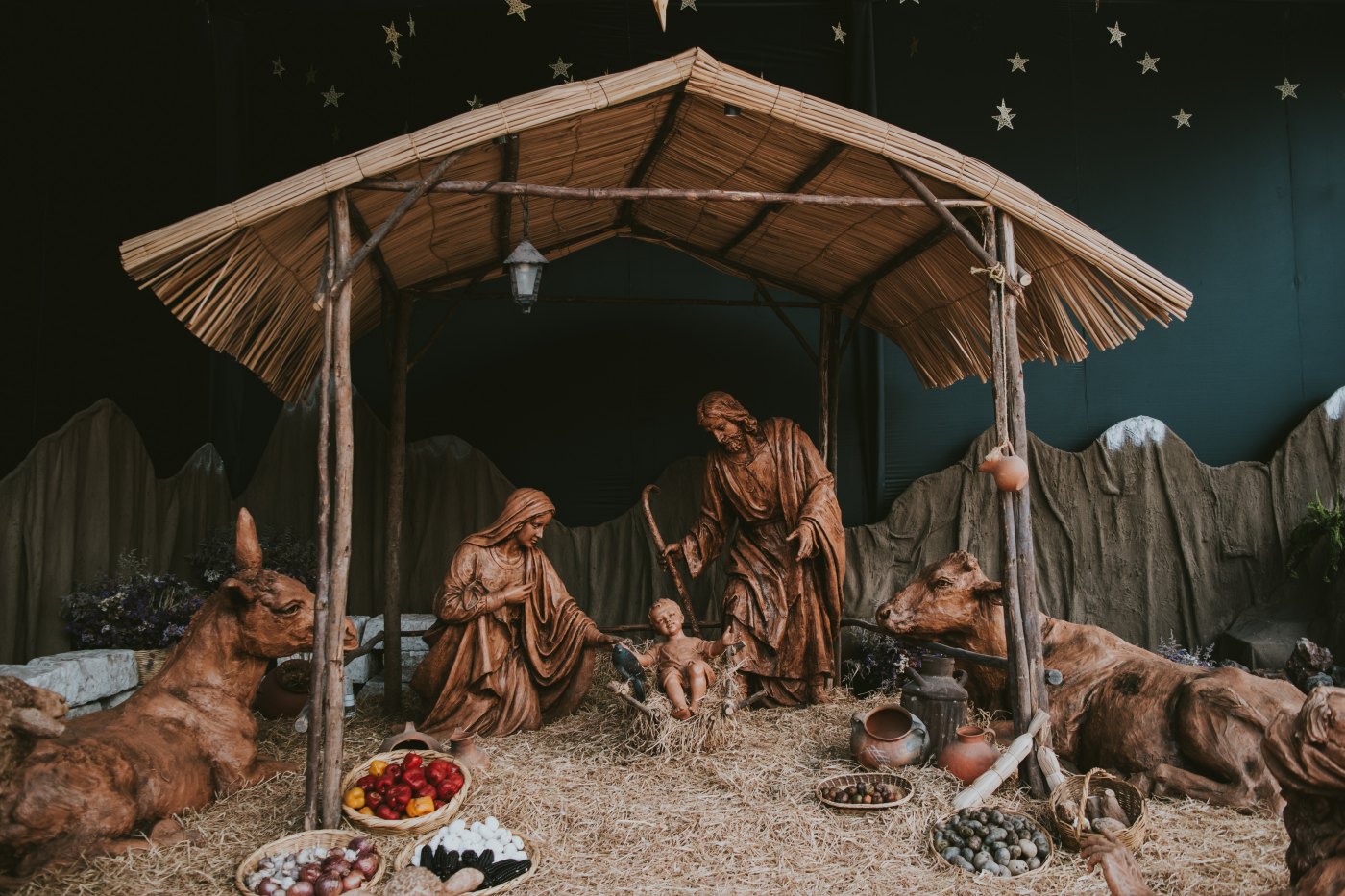
The question “Where was Jesus born?” is surprisingly tricky. The easy answer is, “In Bethlehem.” Yes, but where? The typical nativity scene features the holy family in a stable that looks like a barn, separate from the Inn, where there was no room. But is this accurate? Most historians and scholars say, “Not so much.”

This is a question that I’ve seen pop up more frequently on social media this year than in previous years, so I figured I’d take some time to lay out the facts and present some of the more popular theories.

What We Know
We know that Jesus was born in Bethlehem, there was no room “in the inn,” and that he was wrapped in swaddling cloths and laid in a manger.

“And Joseph also went up from Galilee, from the town of Nazareth, to Judea, to the city of David, which is called Bethlehem, because he was of the house and lineage of David, to be registered with Mary, his betrothed, who was with child. And while they were there, the time came for her to give birth. And she gave birth to her firstborn son and wrapped him in swaddling cloths and laid him in a manger, because there was no place for them in the inn.”
Luke 2:4-7 (ESV)

Aside from these basics, there’s a lot of detail left open: Why were they turned away from “the inn?” Why was there a manger, does that mean they were in the barn with the animals? Where did people in ancient Bethlehem keep the animals? These types of questions have led to a few different theories about where Jesus was actually born, which are briefly summarized below. Continue reading “Was Jesus Born in a Barn, Cave, or House?”

Is Online Church a Real Church?

Nearly ten years ago my cousin Vinnie (I love typing that) told me I should start an online church for people who were open to Christianity but wouldn’t actually go on Sunday mornings. This was long before live-streaming was accessible and few churches had an “online campus.” Now it is fairly common for churches to offer live-streaming of their services today. Recently, Judah Smith’s The City Church has caused a buzz by announcing the launch of a new church: “the phone in the palm of your hand.” Watch their announcement about ChurchHome below.

There are generally two type of responses to creative initiatives like this. Some will call it heresy and will shout, “That’s not church!” Others will hail it as a creative and relevant effort to reach unbelievers with the gospel. Instead of neatly fitting into either category, I want to walk through a few ways both groups might have a good point.  Continue reading “Is Online Church a Real Church?”

Blog at WordPress.com.

Up ↑