Thanos to Theos is the name of a new podcast I’m cohosting with my friends Kevin Yi and Clark Fobes. It’s been an idea we’ve batted around for nearly a year, and we finally pulled it together and started recording episodes around the time quarantine began.
The vision for Thanos to Theos is to talk look into the world of comic books (hence, Thanos) through the lens of the gospel to better understand our own world (that’s the Theos… Greek for “God”). There are enough podcasts about theology and culture and youth ministry, so we’re bringing them together through our own shared love for comics.
Some episodes will lean more towards the “Thanos” side of things and be comics heavy, while others will be more “Theos” oriented and will focus more on theology and culture. All of this is offered for youth workers to help you think biblically about our world and about student ministry.
As a medium, comic books are generally seen as something you should outgrow by the time you’re in high school. But we’ve found that’s just not true. There are solid and meaty insights into the human condition written into those stories, and they’re worth considering. Afterall, if Narnia and the Shire and Hogwarts can teach us something about life in the real world, why can’t Marvel and DC do the same?
So tune in and subscribe through your preferred podcasting app. I’m confident that you’ll find the conversation entertaining and interesting, even if you’ve never been a comic book person.
Finally, a huge thanks is owed to the Rooted Ministry for hosting us and making this dream happen. Rooted is an incredible ministry promoting gospel-centered youth ministry and has recently launched the Rooted Podcast Network, including Ask Alice, All About Boys, Thanos to Theos, and the Rooted Podcast. Learn more on their website and give these other excellent podcasts a subscribe while you’re at it.
In my last post, Living My Theology, I made a distinction between our professed theology and our actual theology. Professed theology is composed of those theological truths we make, saying, “This is what I believe.” While “actual theology” consists of those theological truths that actually shape our daily living. The previous post give more examples of what this looks like. This post reflects on why there’s a difference at all.
We want to live with our faith in Christ integrated into every sphere of life. The reality is, we don’t. At least, not perfectly. Sometimes there’s a wide chasm between the two because we’ve relegated faith to only “spiritual” things, and other times there’s a gap because we simply aren’t fully sanctified and indwelling sin keeps us from living perfectly aligned with our faith. In this post, I want to reflect on these two reasons why there’s a difference between our professed and actual theology.
Fragmented Faith: Where the Difference is Unhealthy
When self-professed Christians live in a way that their faith has little impact on their daily life, what they’ve actually done is lock Jesus in the basement. People don’t live in the basement, they usually use it for storage when needed. It’s where we keep our “extra’s.” When they need something “spiritual,” they go down to the basement to get it, then continue with their lives in the places where real life happens.
Some Christians, especially from an older generation, view their faith as something so private they will not talk about it with others. Instead, they prefer to “live their faith.” But what this actually does is turn faith into a religion of good works. It takes all the intimacy and spirituality out of faith in exchange for external behavior changes that don’t require conversations about the amazing love of God.
Others call themselves Christians but have never understood how their faith connects with real life. So they sleep with their boyfriend/girlfriend, give little attention to personal holiness, and rarely worship with the family of Christ. Their faith is a fragment of their life, not integrated into the whole.
Growing into it: Where the Difference is Healthy
Some Christians will take the challenge to evaluate their professed and actual theology only to conclude they are in good alignment. The rest of us are able to recognize areas where we aren’t.
faith is like receiving your father’s favorite pair of shoes that you just don’t fit into. You can step into them, and you can walk around in them, but they’re simply too big. But over time, you grow into them.
In this sense, faith is like receiving your father’s favorite pair of shoes that you just don’t fit into. You can step into them, and you can walk around in them, but they’re simply too big. But over time, you grow into them. Obviously, this isn’t a perfect example. It breaks down in many ways. But in this sense, I find it helpful: saving faith requires us to profess certain things that we simply haven’t “grown into” yet.
I am not yet holy, and yet I have received the holiness of Jesus Christ. I have been saved from my sin, and yet I continue to battle temptation – sometimes in victory, other times not so much. I am a man of faith, and yet I sometimes pray, “Lord, I do believe. Help my unbelief.” I’m still growing into my faith. And you are too. We’ll be in those “too big” shoes until we graduate into glory.
The last two years have been a whirlwind. It’s been 20 months since my last blog post on this site, and life looks remarkably different. Some of it’s been good (published one book with another currently undergoing the editing process before its release in 2021, a new ministry at an incredible church), and some of it not so great (a painful and sudden ending to a 14-year ministry, living through a global pandemic).
Here’s something I can say I’ve learned: I really do believe my theology.
During the lowest points, my faith in the sovereign goodness of God held my life together. I’m no perfect exemplar of faith, but I have experienced the power of having good theology. It holds you up when you feel like everything else is crumbling. And when your thoughts and heart stray, your own theology rebukes you and calls you back to faith. Over the course of these last 20 months, the Lord has graciously sustained my faith to help me live my theology.
Professed vs Actual Theology
For many of us, our professed theology and our actual theology aren’t the same. By “professed theology,” I’m talking about those theological truths that we affirm with our minds. These are statements about God, the world, humanity, and salvation that we hold up and say, “This is what I believe.” But our “actual theology” consists of those theological truths that guide our daily lives. For instance, if someone who knows you well was asked to write what you truly believe about prayer, God’s goodness, the power of grace, the importance of biblical authority, etc. – would their descriptions of your actual theology align with your professed theology?
For many of us, our professed theology and our actual theology aren’t the same.
One of the greatest areas where I’ve seen this disagreement take place is around the authority of Scripture. Many Christians who profess faith in the authority of the Bible (“it is the Word of God and all truths must be measured according to Scripture”) actually marginalize the Bible in their evangelism. This happens when Christians believe their nonbelieving friends aren’t ready for the Bible yet because it’s over their heads. So instead, they look for more relevant or engaging books. This is a functional denial of the person’s professed theology. If the Bible is the inspired and authoritative Word of God, why would it ever be a good idea to withhold God’s Word from someone who is spiritually dead? Good, clear books about the gospel and evidences for Christianity are helpful to give nonbelievers; but not as a replacement of the Bible.
For pastors, the question is a risky one: If someone evaluated your ministry in order to determine what your core theological convictions are, would they match your stated theology? I suspect, many self-proclaimed Calvinists would be described as functional Arminians, but that’s a topic for another post. Realigning one’s ministry to match their theology could cost them their job.
Trials Reveal Our Theology
These past two years have shown me how much I need to trust in the sovereign goodness of the Lord. Life can change so quickly. It’s good (and wise!) to plan and be prepared for the days to come. But remember that your control is much less than you realize. This is one of the central tenets of Reformed Theology: God is sovereign over all things and he is full of grace for towards his children. I have preached, spoken, and written extensively about this message. This year I’ve experienced this message’s comforting truthfulness.
The trials and victories of life reveal so much about who we really are. Where do we turn for comfort and hope? Is prayer a treasured response, or a last resort? Do I believe God owes me his blessing, or can I praise him from the valley of the shadow of death? These are real-life issues that lift the cover of our faith.
When moments of clarity strike that reveal the differences between your professed and actual theology, don’t avoid them because it’s uncomfortable. Lean in, and grapple with the question, “What do I really believe?” Pray, repent, and believe the power of God’s grace to sanctify you. Then, live your theology.
“Search me, O God, and know my heart! Try me and know my thoughts! And see if there be any grievous way in me, and lead me in the way everlasting!” Psalm 139:23-24
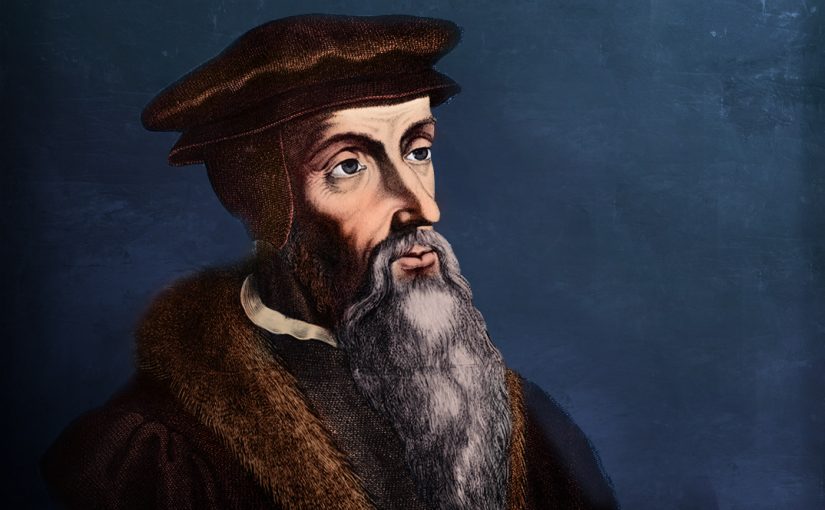
The first time I heard the name of John Calvin was in my high school Social Studies textbook, and it wasn’t a positive introduction. It said something about his belief that people were fundamentally bad and that God chose to love some but not others. Maybe it said more than that, but I don’t remember. What I do know, is I immediately disliked him and wondered how anyone could like this Calvin fellow.
Calvinism is a dirty word in many circles. Even among Calvinists, being called a “Calvinist” can seem like something of a slur. I have already explored some of the path that led me to embrace Calvinism, so I won’t do that here. I also don’t want to write in order to try persuading others to change their doctrinal positions. This article addresses some stereotypes of Calvinists and focuses on what Calvinism isn’t while next week’s article will highlight what Calvinism is.
I was in college when I read a book that captivated me. It was an apologetics book where a theology professor was writing letters back-and-forth with his atheist father, and he carefully and winsomely explained his Christian views. The problem was, some of those views were radical reinterpretations of what the Bible teaches. Because of this book there were a number of significant doctrines that I misunderstood for years. Since then, I have grown more discerning and careful about evaluating what I read and listen.
We are all called to be careful readers and listeners, to be on guard against false teachers. Sometimes it might come off as spiritual superiority (“I know better than they do, I’m not falling for it!”) or spiritual arrogance (“I can’t believe you’d read that book”). We need to remain humble even as we grow in our spiritual discernment, but one of my great concerns for Christians today is a lack of spiritual discernment.
There are authors and musicians (yes, our Christian music can easily spread false teaching) who are on the Christian best seller’s list, but they’re false teachers who should be avoided. Sure, maybe their books are really fun to read, their personalities are engaging, and some of their stuff is helpful. But the Bible calls Christians to be spiritually discerning, because there are false teachers who can lead well-intentioned believers astray.
Do false teachers concern you? Do you ask theological questions about the books you read, music you listen to, shows you watch, or teachers you learn from? Sadly, we cannot simply trust anyone who talks about Jesus and quotes the Bible.
Evangelism has always been difficult. Gone are the days when even nonChristians generally understood what Christianity taught. Nowadays, even many professing-Christians struggle to articulate the essentials of Christian theology. Because we can no longer assume a general awareness of Christian thinking, evangelism will continue to require us to teach basic theological truths before we can be assured that people know enough to truly become Christians.
Here are three truths every Christian should know and be able to clearly explain to others.
Jim grew up in church and still believes most of what he learned there, but his life doesn’t look like you might expect. He cusses, drinks more than he should, has been known to sleep around on occasion, and hasn’t gone to church (or read the Bible) in well over a decade. But overall, he’s a good guy who tries to look after his friends as best he can. When Jim hears coworkers talking about religion, he often jumps in to offer the “Christian perspective.” He considers himself a Christian (although he’s quick to admit “I’m a bad Christian”).
While friends like Jim don’t really care what label you give them, it’s worth our time to figure out what’s going on when religious ideas seems to get confused as faith.
Photo by Maarten van den Heuvel on Unsplash
What is Faith?
The Bible defines faith this way,
“Now faith is the assurance of things hoped for, the conviction of things not seen.” (Hebrews 11:1 ESV)
Faith isn’t simply a “good idea.” It’s assurance and conviction in what is unseen. The visible is interpreted through the lens of the unseen – faith shapes life.
Because God is holy – I live my life to worship and honor him
Because God is merciful and gracious – I am accepted because of his provision, not my performance
Because God is the judge – I live according to his law
Because God is faithful – I will trust him even in the midst of suffering
Because the Bible is God’s Word – I will read it, understand it to the best of my ability, and obey it as the very word of God
Theology is important. What you believe about God matters. But for the normal Christian (or the person who’s considering Christianity), it can be extremely overwhelming to know where to begin.
Here are three things every Christian must know. They are also useful for evangelism and sharing the Gospel with others, because this is a clear and simple way to summarize what is at the heart of Christianity.
The Essential Core:
Who God is: God is the holy creator of heaven and earth who made us in his image to love and worship and reflect him in this world.
What God has Done: Because we have sinned, and our sin has earned God’s judgment, He took the initiative to rescue us from the wrath we deserve. In love, God came to us in Jesus Christ who lived and died and conquered death on our behalf so we could be forgiven, made new, and adopted as sons and daughters of God.
Who is God Calling You to Be: As a son/daughter of God, my life isn’t my own, but God’s. I live for his glory and not my own. I live to do everything in a way that shows the light and love and saving grace of God to all people, inviting them to confess their sin, repent, and become children of God themselves.
What you believe matters. Your beliefs about the world, yourself, and God are always operating in the background of your mind, shaping your decisions and passions. Especially today, where tolerance is often talked about but little practiced, talking about religious belief is difficult and tricky.
Being a Christian means you believe certain theological statements are true while rejecting other claims about God and religion are not true. Of course, that’s not unique to Christianity. Judaism, Islam, Buddhism, Hinduism, and even Atheism have their own “theological walls” that set the boundaries… and if you pass those boundaries then you can no longer be considered a part of that theological camp.
For example,
An Atheist cannot believe in intelligent design.
A Buddhist cannot believe the Jesus is the only way to heaven.
A Christian cannot believe there are multiple paths to heaven.
While some people throw the word “Heretic” at anyone with whom they have a strong disagreement, that doesn’t capture what heresy is. Heresy is a teaching that undercuts and contradicts the essential teachings of a religion. This is why Christians may disagree regarding Baptism or the Lord’s Supper, but Mormons and Jehovah’s Witnesses are considered cults who are outside the bounds of true Christianity. Continue reading “How to Not be a Heretic”→












 Living Theologically